airender.ai vs RoomGPT (2026): Render vs Buyable Room
Both turn a photo of your room into a redesign in under a minute. Only one tells you what the chair costs and where to buy it. Here's the honest breakdown, with current prices.
Short answer. RoomGPT is the better free toy: unlimited-feeling, fast, 4M+ users. airender is the better tool if you intend to actually buy anything: every item in the redesign is a real, in-stock product with a live price and buy link, with a running total for the whole room. RoomGPT costs $15 to $30/mo (or about $9 for credit packs) for pictures; airender is $19/mo or $75 once for pictures plus the shopping list. Compare more tools in the shopping-list guide.
01 / The verdict
The 30-second verdict
RoomGPT, built by Hassan El Mghari, is one of the original AI room tools and still one of the fastest ways to see your room in a new style. It has been used by over 4 million people and was covered by Business Insider, NBC, and Yahoo News. If your goal is inspiration, it delivers in about 20 seconds.
The problem starts the moment you like what you see. RoomGPT's output is a picture of furniture that does not exist — no brand, no price, no store. You're left reverse-image-searching a hallucinated sofa. That gap between "inspired" and "bought" is exactly what airender was built to close: the redesign is assembled from real, in-stock listings, so the after-image comes with an itemized, buyable list and a running total.
4M+People have used RoomGPT — the category's biggest audience, per roomgpt.io
$2,123Starting total of a real 11-item airender living room list, known before you buy
~60sBoth tools go from photo to redesign in about a minute
Pricing note. RoomGPT's checkout runs frequent flash sales, and third-party reviews report credit packs from ~$9 for 30 credits up to $15–$30/mo subscriptions. Treat any RoomGPT price you read, including here, as the ceiling, not the floor.
02 / The gap
What's the difference between an AI render and a buyable room?
Every AI room tool answers the question "what could this room look like?" Almost none answer the question you actually have next: "what do I buy to make it look like that?" That's the line that separates the two tools in this comparison, and the old approach from the new one.
Render-only tools (RoomGPT)
Buyable-room tools (airender)
Output
An image
An image + itemized product list
The furniture
AI-invented, doesn't exist
Matched 1:1 to real, in-stock listings
Prices
Unknown
Live prices per item + room total
Next step after "I love it"
Reverse-image-search each item, hope
Click the buy links
Budget control
None
Swap any item for a cheaper alternate; total updates live
Ships to you?
N/A — nothing to ship
Localized: your currency, retailers that deliver to your country (70+ supported)
Best for
Inspiration, moodboarding
Actually furnishing the room
Neither approach is wrong. If you're daydreaming, a render is enough. But designers cost about $99 an hour on average precisely because someone has to convert inspiration into a purchasable plan — and that conversion step is the entire value gap between these two tools.
03 / Head-to-head
RoomGPT vs. airender, tool by tool
Same brief for both: upload a room photo, get a redesign back. Here's how each one actually handles it, reviewed on its own terms before the scorecard at the end.
RoomGPT is the tool that made "AI room redesign" a category. Upload a photo, pick a theme, and it re-imagines the space in about 20 seconds. Built by indie developer Hassan El Mghari, it has been used by over 4 million people and covered by Business Insider, NBC, and Yahoo News. If your goal is inspiration, it delivers.
Key features
Redesign from one photo in about 20 seconds
100+ style themes
Free credits at signup, no card
Up to 4 variations per run
Massive community and press track record
Dead-simple UI, zero learning curve
Pros
Fast, free to try, and fun — the lowest-friction tool in the category
Huge style variety for pure inspiration
Proven at scale: 4M+ users, mainstream press coverage
Cons
The furniture in the render doesn't exist — no brands, prices, or links
Credit-based pricing punishes iteration, and good design takes attempts
No budget tools, no localization, no path from image to purchase
Why it wins its lane. Nothing gets you from a boring room photo to an "ooh" faster or cheaper. As a zero-commitment inspiration machine, RoomGPT is still the category benchmark.
"This is incredible, you don't need an interior designer anymore." — RoomGPT user testimonial
Free credits at signup · packs from ~$9 · subs $15–$30/mo
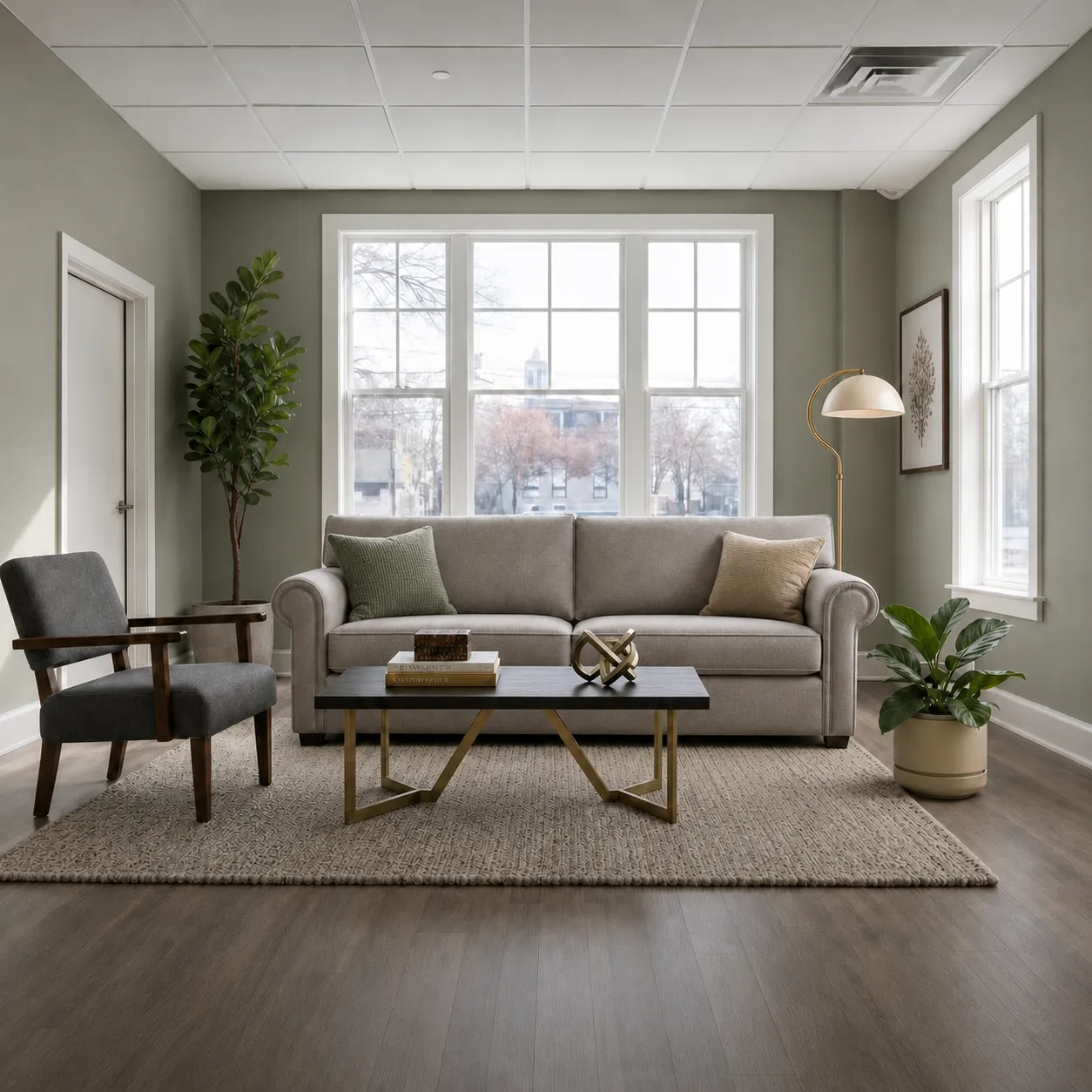
airender runs the same photo-to-redesign flow, then does the part RoomGPT leaves to you: it matches every piece in the result to a real, in-stock listing — live price, working buy link, localized to whichever of 70+ countries you're shopping from.
Real "shop this look" list
US$2,123–US$5,161 · 11 items
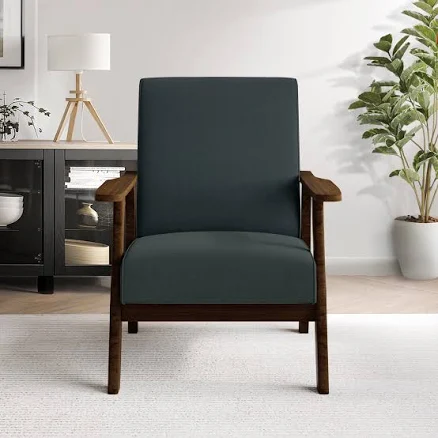
Accent Chair
Walmart
$138
Arc Floor Lamp
English Elm
$241
Natural Fiber Rug
World Market
$30
Botanical Print
The Wall Habitat
$33
4 of the 11 items in a real airender living room — merchant, price, and buy link for every piece.
Key features
Photo to buyable room in about 60 seconds
Every item: merchant, live price, buy link
Running room total, updates as you swap pieces
Swap any item for a cheaper or pricier alternate
Localized: your currency, stores that ship to you
Plain-language edits, like "make the sofa darker"
Pros
Closes the inspiration-to-purchase gap — the list is the output
Flat pricing: $19/mo unlimited or $75 lifetime, iteration is free
Works outside the US — a shopper in Germany sees EUR and EU retailers
Cons
Free tier is 2 redesigns with a teaser list, vs. RoomGPT's more generous free play
6+ curated styles, not 100+ — depth over breadth
Renders are "shop this look" close, not pixel-perfect SKU photos
Why it wins its lane. It's the only one of the two that can answer "what will this room cost me?" before you've spent anything. Full disclosure: I built airender, which is why this comparison exists.
"Inspiration is easy. A buyable room is the hard part."
Pricing: why credits and flat rates feel so different
On paper the two cost similar money. In practice the models feel different because design is iterative — almost nobody keeps the first render.
Iteration cost under credit pricing vs. a flat plan. Steps are illustrative; RoomGPT credit pricing per Decoratly (2026).
Plan
RoomGPT
airender
Free
1–3 credits at signup (sources vary)
2 full redesigns + teaser shopping list, no card
Entry paid
~$9 / 30 credits
$19/mo — unlimited redesigns & full lists
Ongoing
$15–$30/mo subscription tiers
$19/mo, or $75 once (lifetime)
Cost of iterating 40×
~$40–80 in credits
$0 extra
What you own at the end
Images
Images + a priced, buyable plan
Context. The thing both tools replace — a traditional interior designer — runs $2,000–$15,000 per project, excluding furniture. Either tool is a rounding error against that; the real comparison is what you get for it.
05 / The wider field
Best RoomGPT alternatives in 2026, ranked
If you landed here searching for a RoomGPT replacement rather than a head-to-head, here's the field, ranked by what you get after the render, since that's where RoomGPT stops. Yes, airender is first; the reasoning for each rank is stated per entry so you can disagree productively.
Same upload-a-photo workflow, but the output is a buyable plan: every item matched to a real in-stock listing with merchant, live price, buy link, and a running room total you can tune with cheaper alternates. Localized to 70+ countries. Free tier: 2 full redesigns, no card.
Ranked #1 because: It's the only alternative that eliminates the reverse-image-search step entirely — the gap every render-only tool shares with RoomGPT.
The closest like-for-like RoomGPT swap with a real edit mode: paint walls, swap furniture, remove objects after generating instead of burning another credit. Two render modes, clone-from-Pinterest, and a Google Shopping lookup for similar products. 2 free redesigns plus 1 edit; a flat $4.99 day pass or $14.99/mo.
Ranked #2 because: Best-in-class editing, and its Google Shopping integration gets you similar products — a half-step toward buyable, without airender's 1:1 matching or localization.
The pick if your room is empty: a rental turnover, a new build, or a listing to stage. Strong at furnishing bare space and popular with real-estate agents, though less flexible for restyling a lived-in room.
Ranked #3 because: It beats both RoomGPT and airender on the empty-room and staging use case, but it's a professional's tool, priced and shaped accordingly.
One of the originals, built by Pieter Levels. Higher-quality renders on the Pro and Ultra plans, sketch-to-render, and video walkthroughs, aimed at real-estate and prosumer use. No free tier worth mentioning; roughly $17–$39/mo depending on tier.
Ranked #4 because: The output ceiling is high, but you're paying subscription money for pictures — the same "now go find the furniture yourself" ending as RoomGPT.
A different species: 2D/3D floor planning with AI floor-plan recognition and a drag-and-drop furniture catalog. If you're moving walls rather than restyling from a photo, this is the tool — but it's a project, not a 60-second render.
Ranked #5 because: It solves a bigger, adjacent problem. Wrong swap for a casual RoomGPT user; the right one for a renovator.
Free basics · ~$14/mo
Not listed: Midjourney and Adobe Firefly. Both generate gorgeous interiors from text prompts. Neither takes a photo of your actual room, which is the entire point of a RoomGPT alternative. If a tool can't pass the upload-your-own-room test, it's a different category.
06 / Before you switch
Buyer's guide: what to check before switching from RoomGPT
1. The upload-your-own-room test
Plenty of "AI interior design" tools are prompt-to-image generators wearing a home-decor skin. If your goal is your bedroom in Japandi, the tool must work from your photo. RoomGPT, airender, Decoratly, and REimagine Home pass; Midjourney and Firefly don't.
2. Credits vs. flat rate — do the iteration math
Good results take attempts: most people run 5–15 variations before landing one. At RoomGPT's ~$1–2 per credit that's $10–$30 per room; under a flat plan ($19/mo airender, $14.99/mo Decoratly) iteration costs nothing extra. One-off curiosity, credits are fine. Any real project, flat rate wins, every time.
3. What happens after "I love it"?
This is the question almost no comparison asks. A render's endpoint is a screenshot. Ask what the tool hands you next: an edit mode (Decoratly), a staging export (REimagine), or a priced shopping list with buy links and a room total (airender). Match that endpoint to your actual next step: refining, listing, or buying.
4. Does it work where you live?
US-centric tools break quietly abroad: prices in dollars, links to stores that won't ship to you. If you're outside the US, check localization before paying — airender is currently the only tool in this list that localizes the full product list to 70+ countries in your currency.
07 / The call
Which should you choose?
Choose RoomGPT if…
You want maximum free play, you're moodboarding a distant someday-project, or you just want to see your room in 30 styles tonight. It's the best pure toy in the category, and "toy" isn't an insult — inspiration matters.
Choose airender if…
You're within a few months of spending real money on the room. The moment your next question is "okay, but what do I buy?", a render-only tool sends you off to reverse-image-search; airender hands you the list with a total. Also the clear pick outside the US — it's the only tool of the two that localizes products to 70+ countries.
Choose neither if…
You need construction-grade output — floor plans, renovations, wall-moving. That's Planner 5D territory, not photo-restyling territory.
08 / The playbook
From photo to furnished room: a 4-phase workflow
How to combine free inspiration with a buyable plan without wasting money on credits.
1
Explore wide (free)
Burn RoomGPT's free credits — or airender's 2 free redesigns — trying styles you'd never pay to try. Goal: pick a direction, not a product.
2
Commit to one style
Re-run your room in airender in the chosen style. Now every object in the after-image is a real listing with a price.
3
Tune the budget, not the vibe
Swap items for cheaper alternates and watch the room total move. A $2,900 room becomes a $2,100 room in four swaps — same look.
4
Buy in one sitting
The list links to retailers that ship to your country, in your currency. No tabs, no guessing, one running total.
09 / At a glance
Full comparison table
The whole matchup in one view. "Real buyable products" is the row that matters most for this comparison, so it leads.
Criteria
RoomGPT
airender
Best for
Free inspiration at scale
Furnishing the room for real
Key feature
Instant restyle, 100+ themes
1:1 product-matched shopping list + running total
Real buyable products
No
live prices & buy links
Localization
No
70+ countries, your currency
Budget tools
No
swaps + live total
Ease of use
★★★★★
★★★★★
Free tier
1–3 credits
2 full redesigns, teaser list
Price
~$9 packs · $15–30/mo
$19/mo · $75 lifetime
Prices reflect the lowest paid tier at publication and may change. Confirm current pricing on each tool's checkout page before subscribing.
10 / Questions
Frequently asked questions
Is RoomGPT actually free?
Partly. New accounts get free credits and each redesign uses one. After that RoomGPT sells credit packs from about $9 for 30, or subscriptions from $15 to $30 a month, with frequent flash-sale discounts — check the checkout before paying full price. RoomGPT's free play is more generous than airender's 2 free redesigns, but neither is unlimited-free.
Does RoomGPT tell you where to buy the furniture?
No. RoomGPT's output is an AI-generated image; the furniture in it is invented by the model and doesn't correspond to a real product. To buy anything you'd reverse-image-search each item, and Google Lens gets you "similar-ish" results at best. This is the core difference in this comparison: airender builds the redesign from real, in-stock listings, so every item already has a merchant, a live price, and a working buy link.
What's the difference between airender and RoomGPT in one sentence?
RoomGPT answers "what could my room look like?" — airender answers that plus "what exactly do I buy, from which store, for how much, shipped to my country?" Of every AI room tool we've tested, it's the only one where the full result is buyable: real, in-stock products with live prices and working links across 70+ countries.
How much does airender cost compared to RoomGPT?
airender: free for 2 full redesigns (no card), then $19/month unlimited or $75 one-time lifetime. RoomGPT: free signup credits, then ~$9 credit packs or $15–$30/mo tiers. Because RoomGPT charges per generation, heavy iteration costs more there; airender's flat plans make iteration free. Both are trivial next to a human designer's $2,000–$15,000 per project.
Is the airender render exactly what I receive in the mail?
Close, not identical. The listed products are the real, buyable items, but AI renders aren't pixel-perfect SKU photography — think "shop this look." What's exact is the list itself: merchant, current price, and a link for every piece, plus the room total before you spend anything.
Do either of these work outside the US?
RoomGPT's renders work anywhere, since an image is an image, but there's nothing to localize because nothing is purchasable. airender localizes the whole shopping list — currency, prices, and retailers that actually deliver to you — across the US, UK, core EU, and 70+ supported countries. A shopper in Berlin sees EUR prices from EU stores, not a US list they can't order from.
Which is better for real-estate virtual staging?
Honestly, neither is purpose-built for it. RoomGPT gets used for quick staging mockups, and tools like Interior AI target that market explicitly with higher-resolution output. airender is built for people furnishing their own homes, so the shopping list is wasted on a staging photo. For staging, compare RoomGPT against Interior AI instead.
Is there a RoomGPT app for iPhone or Android?
RoomGPT runs as a web app in the browser — there's no dedicated app in the App Store or Google Play, just the mobile browser version. airender works the same way: open airender.ai on your phone, upload straight from your camera roll. For both tools, "no app" is a feature in practice: nothing to install, works on any device.
Does RoomGPT charge per design?
Yes — that's the core of its model. Every generation uses a credit, credits run ~$1–2 each in packs, and there's no unlimited plan. Reviewers consistently flag the same consequence: iteration gets expensive, and iteration is how you get a result you actually like. airender charges flat ($19/mo or $75 once), so the 15th attempt costs the same as the 1st: nothing extra.
What's the best free RoomGPT alternative?
Depends what "free" needs to include. For the most free renders: Decoratly (2 redesigns + 1 edit, no card). For free renders that come with real product data: airender's free tier (2 full redesigns with a teaser shopping list, no card). RoomGPT itself gives 1–3 free credits at signup. Run the same photo through each and compare outputs, not marketing.
Can the AI handle kitchens, bathrooms, or empty rooms?
Both tools handle standard rooms — living rooms, bedrooms, kitchens, offices. Empty rooms are a genuine differentiator case: airender treats an empty room as a blank canvas and furnishes it with buyable items (useful right after moving in), while for staging-grade empty-room work, REimagine Home is the specialist. Brighter, straight-on photos give both tools their best results.
Is airender's shopping list accurate — real stock, real prices?
The list is built from live retailer listings at generation time: merchant, current price, and a working link per item, plus alternates if something's out of stock or over budget. Two honest caveats: prices move (that's why the total updates live when you swap items), and the render is a close depiction rather than pixel-perfect SKU photography — the products are exact, the pixels are "shop this look."
Can I try both before paying anything?
Yes, and you should — it's the fastest way to feel the difference. Run the same room photo through RoomGPT's free credits and airender's 2 free redesigns (no card either way). One gives you pictures. The other gives you pictures with a priced list attached. Whichever output answers your actual next question is your tool.
See your room — and its price tag
Upload a photo, pick a style, and get the redesign plus an itemized shopping list with a running total. 2 free redesigns, no credit card.