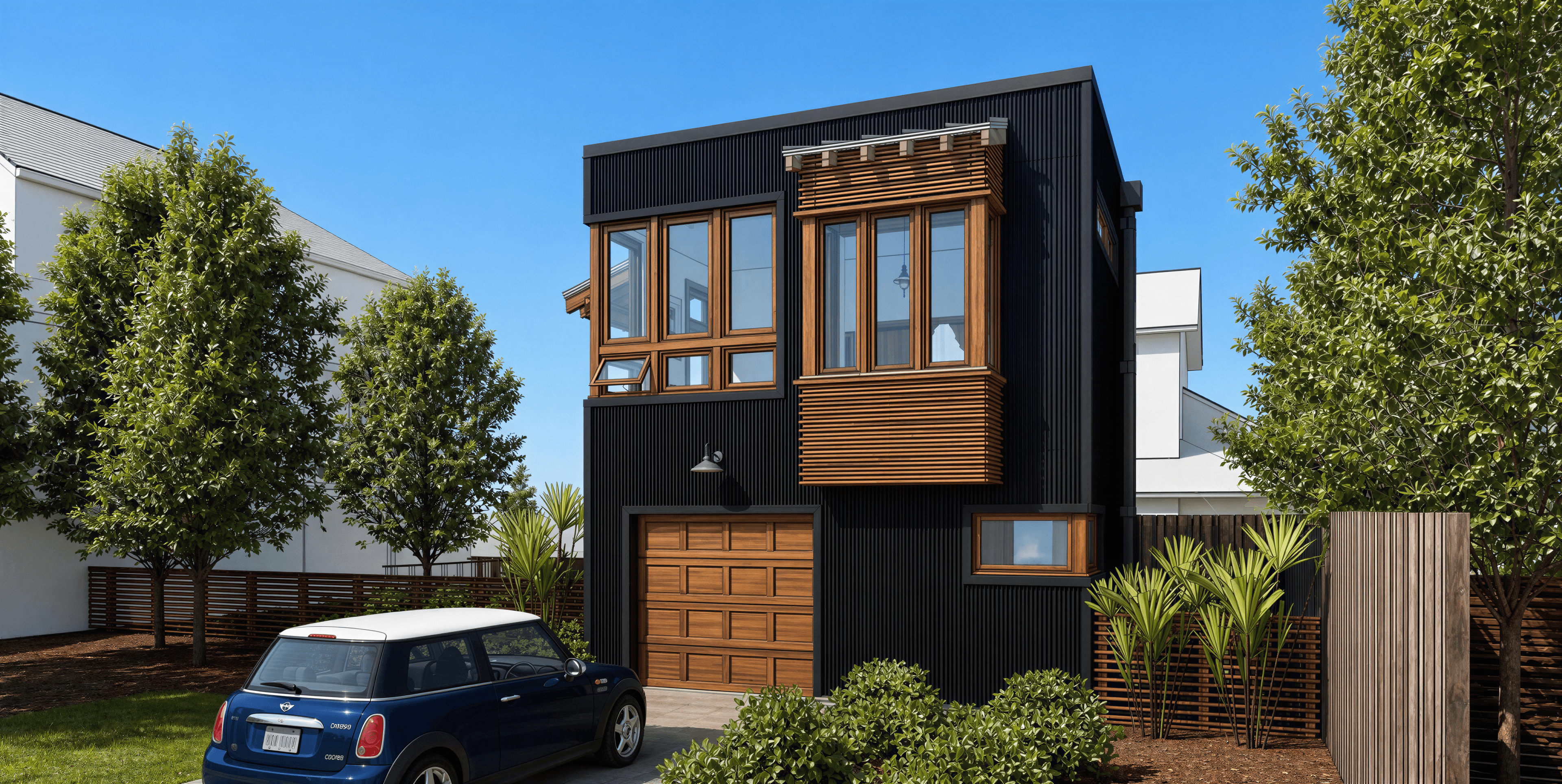
What this lighting is
How to render cinematic dramatic
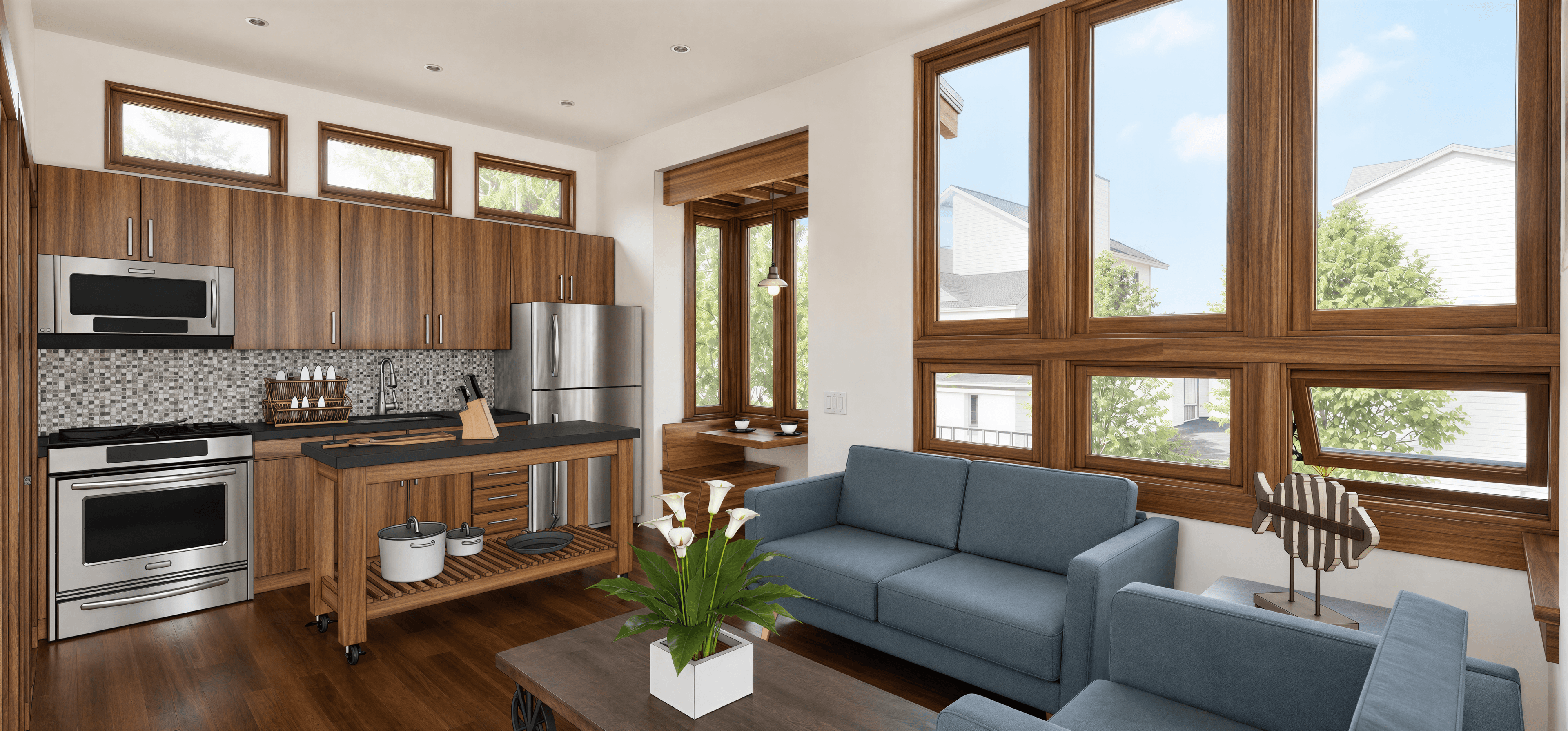
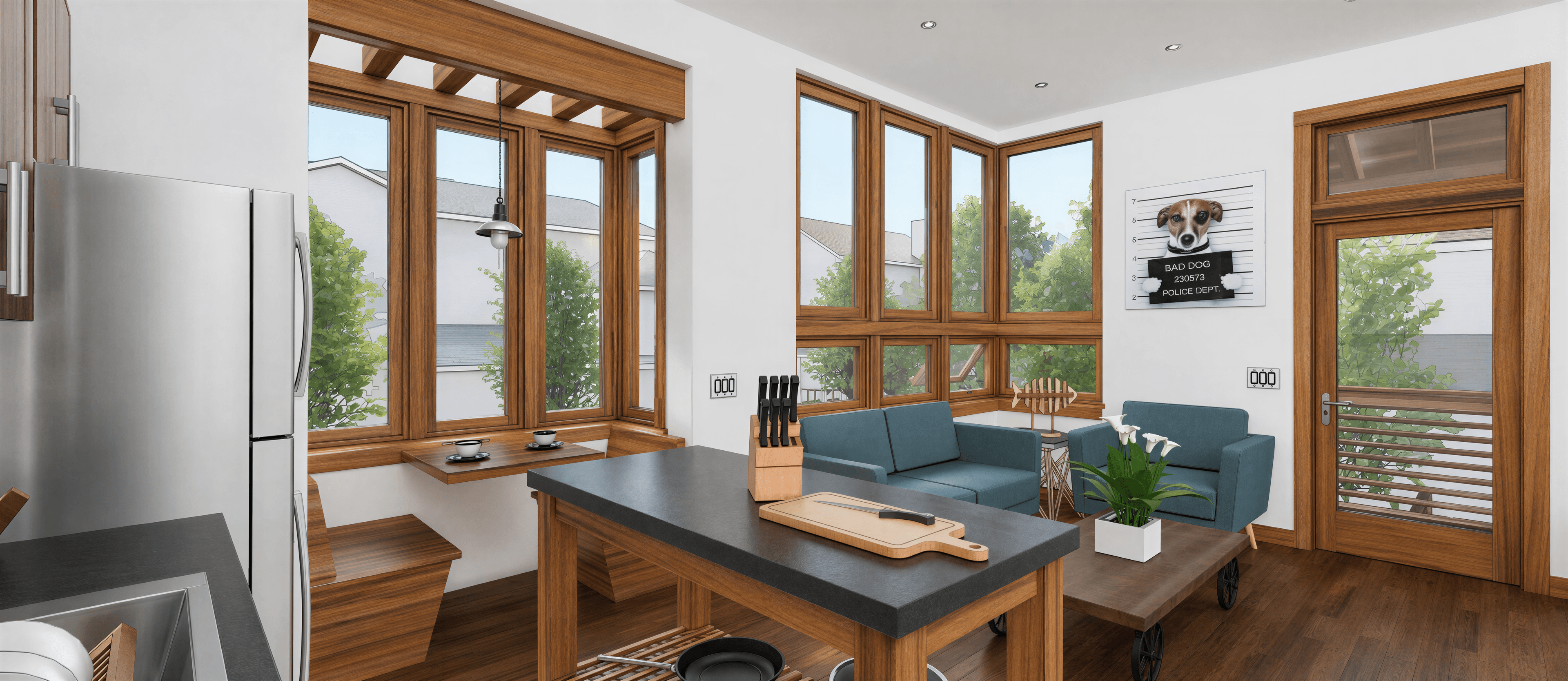
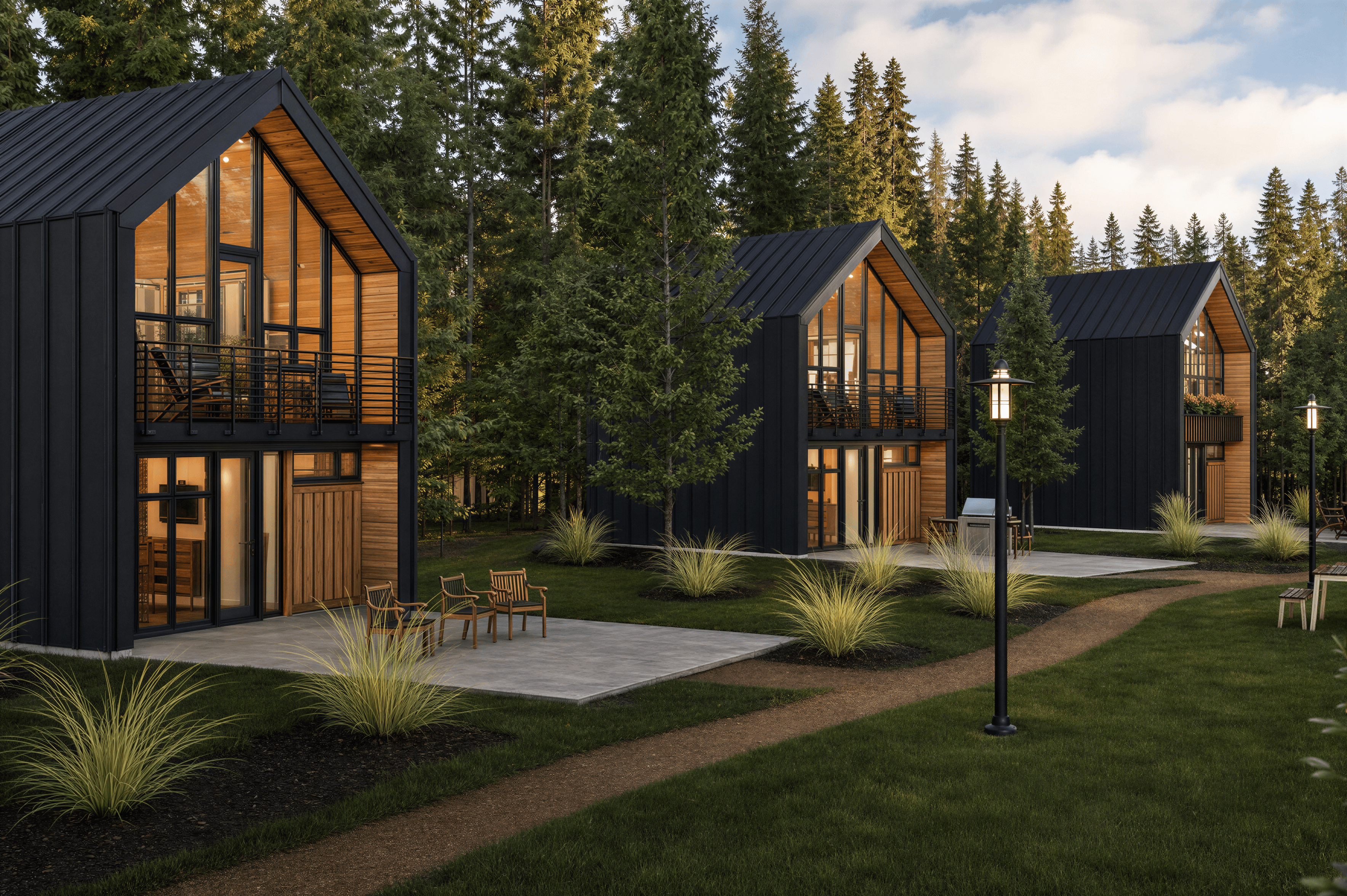
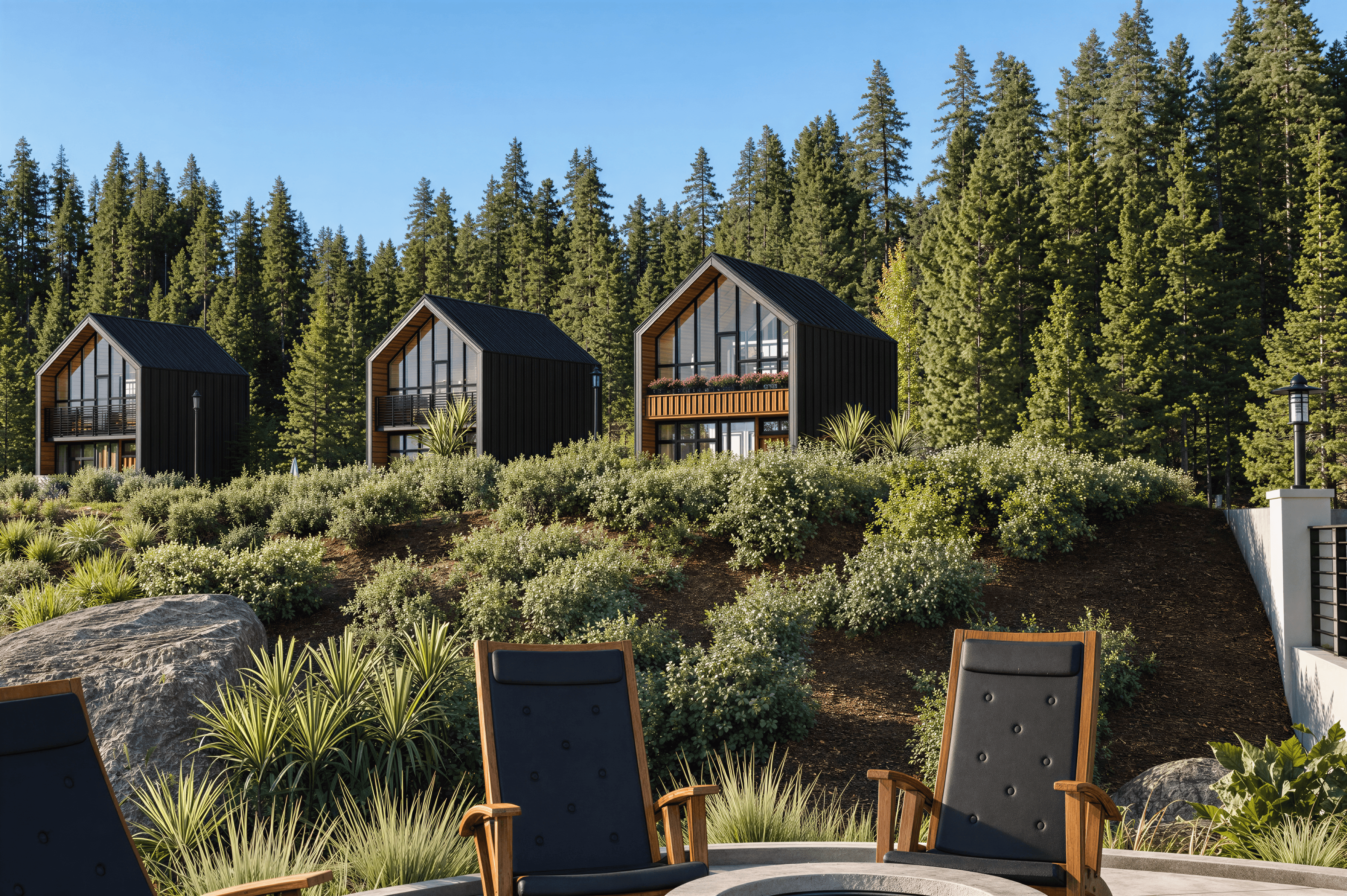
Cinematic dramatic lighting describes a class of lighting setups borrowed from film — strong directional sources with high contrast, deep shadows holding detail, and a mood that reads as substantial and slightly theatrical. It's not a specific time of day or weather condition; it's a deliberate look used in architectural rendering when the goal is to make the space feel important rather than functional.
For AI rendering, the cues are direction, contrast, and shadow depth. A single dominant source — usually a large window or skylight — rakes light across the scene at roughly 30 to 45 degrees from one side. Shadows are long, hard-edged, and dark, but they should still hold detail rather than going completely black. Color is slightly warm but never saturated.
The trick is keeping the contrast high without losing structure in the shadows. AI tends to either go flat-lit (ignoring the cinematic direction) or go fully blown-out (losing detail in the shadows). The prompt phrase 'deep shadows with retained detail' or 'preserved structure in the shadows' pushes the AI toward the cinematic middle.
Cinematic dramatic suits Industrial, Loft, and dark-toned Japandi interiors particularly well, plus exterior architectural shots where you want the building to feel monumental. It works less well for residential everyday rooms where the dramatic reading can feel staged. Use it when the room itself has dignity worth dramatizing.
Technical specs
Cinematic dramatic at a glance
Reference numbers for matching this lighting in any 3D tool or render setting. Use them as a sanity check for what the prompt should produce.
Prompt syntax
Add this to your render prompt
Combine this phrase with a style direction and material choices for a full prompt. The lighting wording should usually come at the end so it modifies the overall mood rather than competing with the material specifics.
Cinematic dramatic syntax
Paste into the prompt field in airender, or use as a starting point and tweak the details.
Scene palette
Typical colors under cinematic dramatic
These are the dominant colors you tend to see in a scene rendered under this lighting — highlights, mid-tones, shadows, and sky bounce. Click any swatch to copy.
FAQ
Common questions
Frequently Asked
Questions
How do I keep cinematic shadows from going completely black?
Specify 'deep shadows with retained detail' or 'preserved structure in the shadows'. Without this the AI tends to crush shadows to true black, which loses the architectural form. The cinematic look depends on shadows that are dark but still readable.
Single source or multiple sources for cinematic?
Single dominant source — this is what creates the high contrast cinematic mood. Multiple sources flatten the lighting and lose the theatrical quality. Specify 'single dominant light source' or 'one strong window from the left' to keep the AI from filling in with ambient lights.
What time of day works best for cinematic dramatic?
Late afternoon (around 3-4pm) or early morning (around 8-9am) — times when the sun is at roughly 30-45 degrees from the horizontal, casting long shadows but still providing strong directional light. You can also stack with 'low sun angle' for explicit control.