What this style is
How to read a loft interior
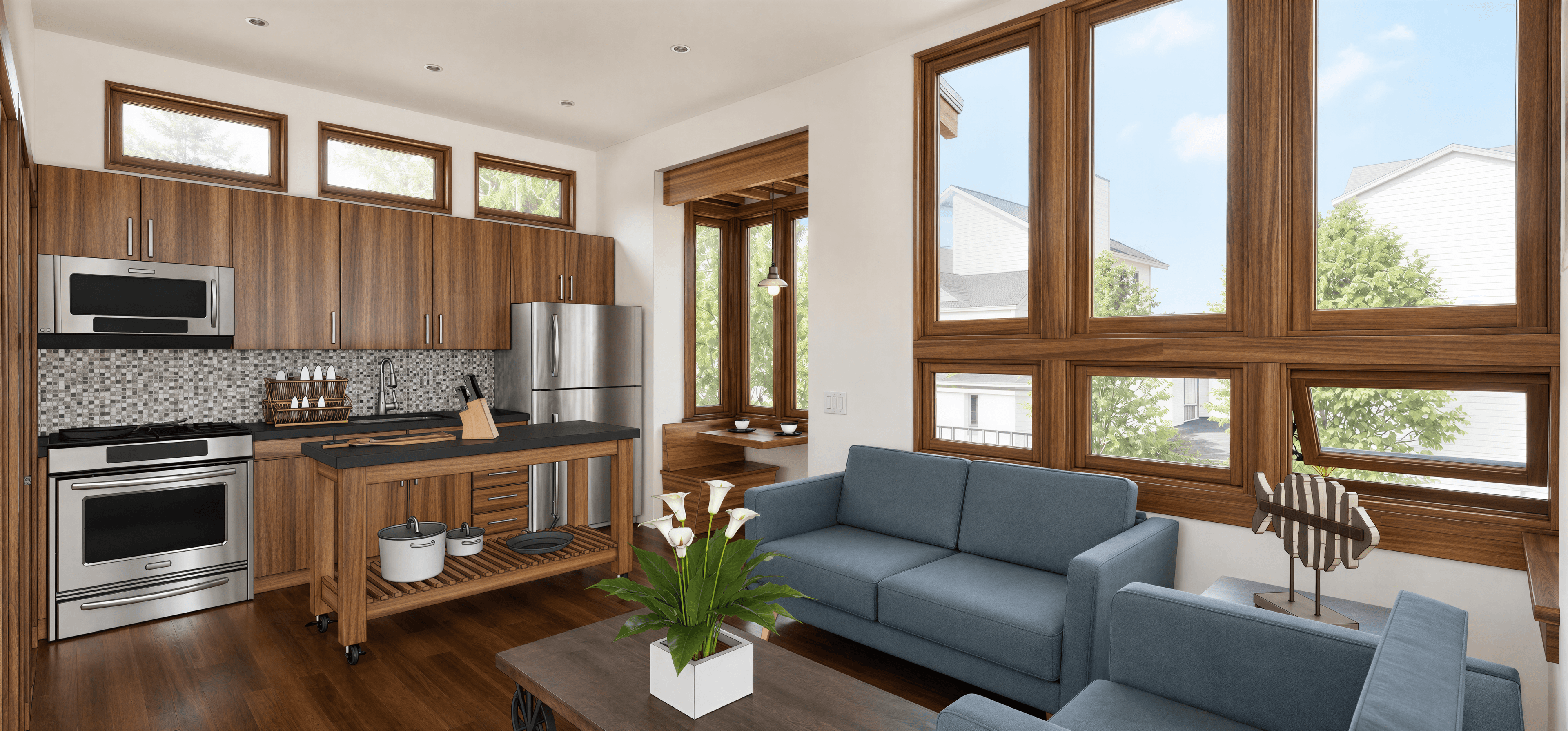
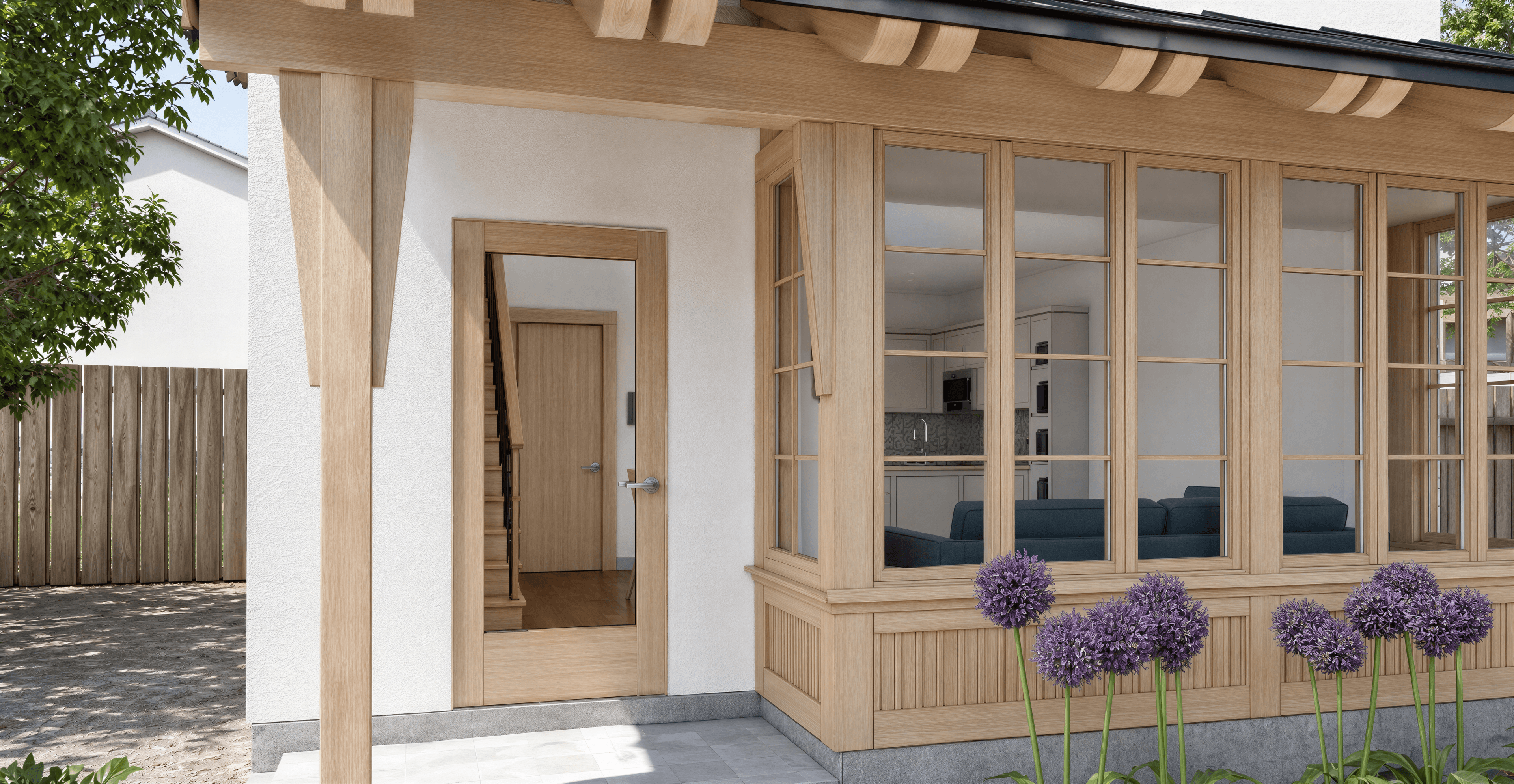
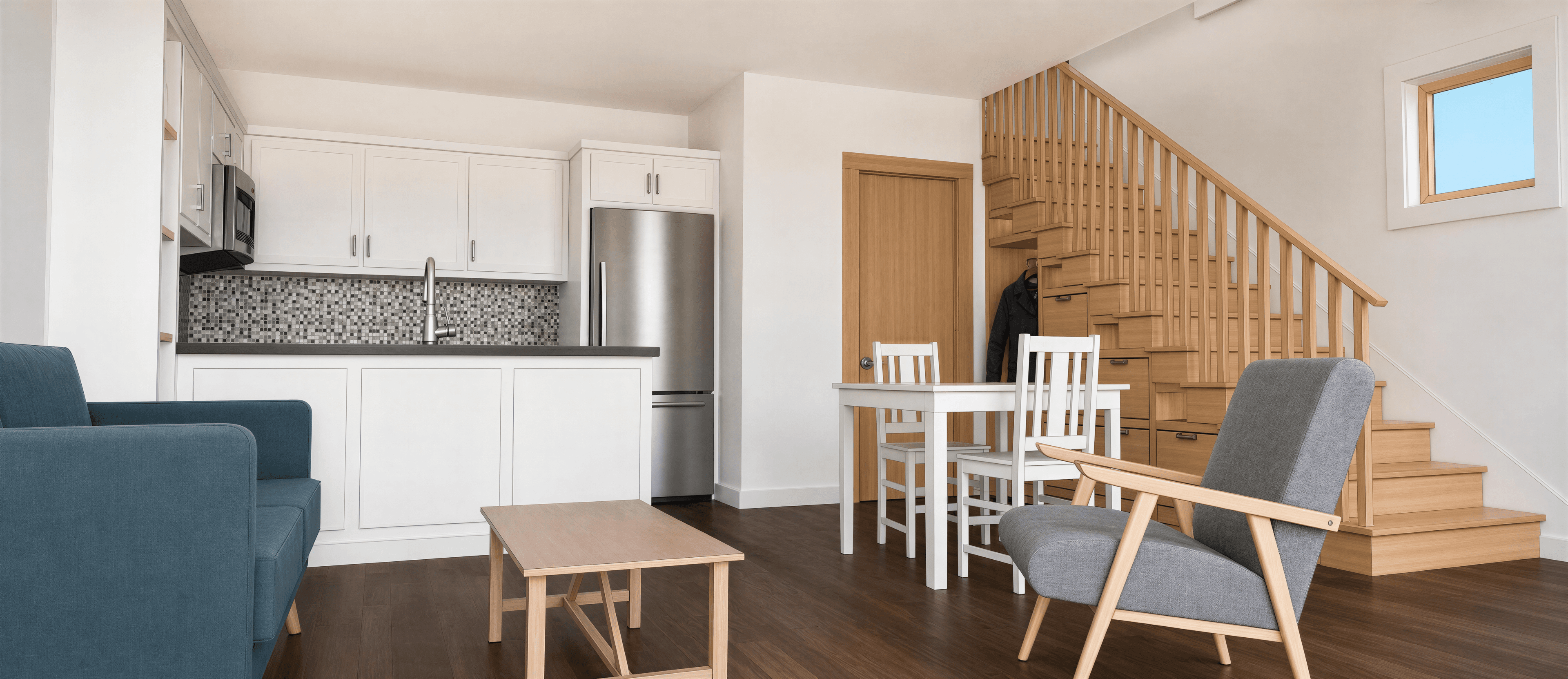
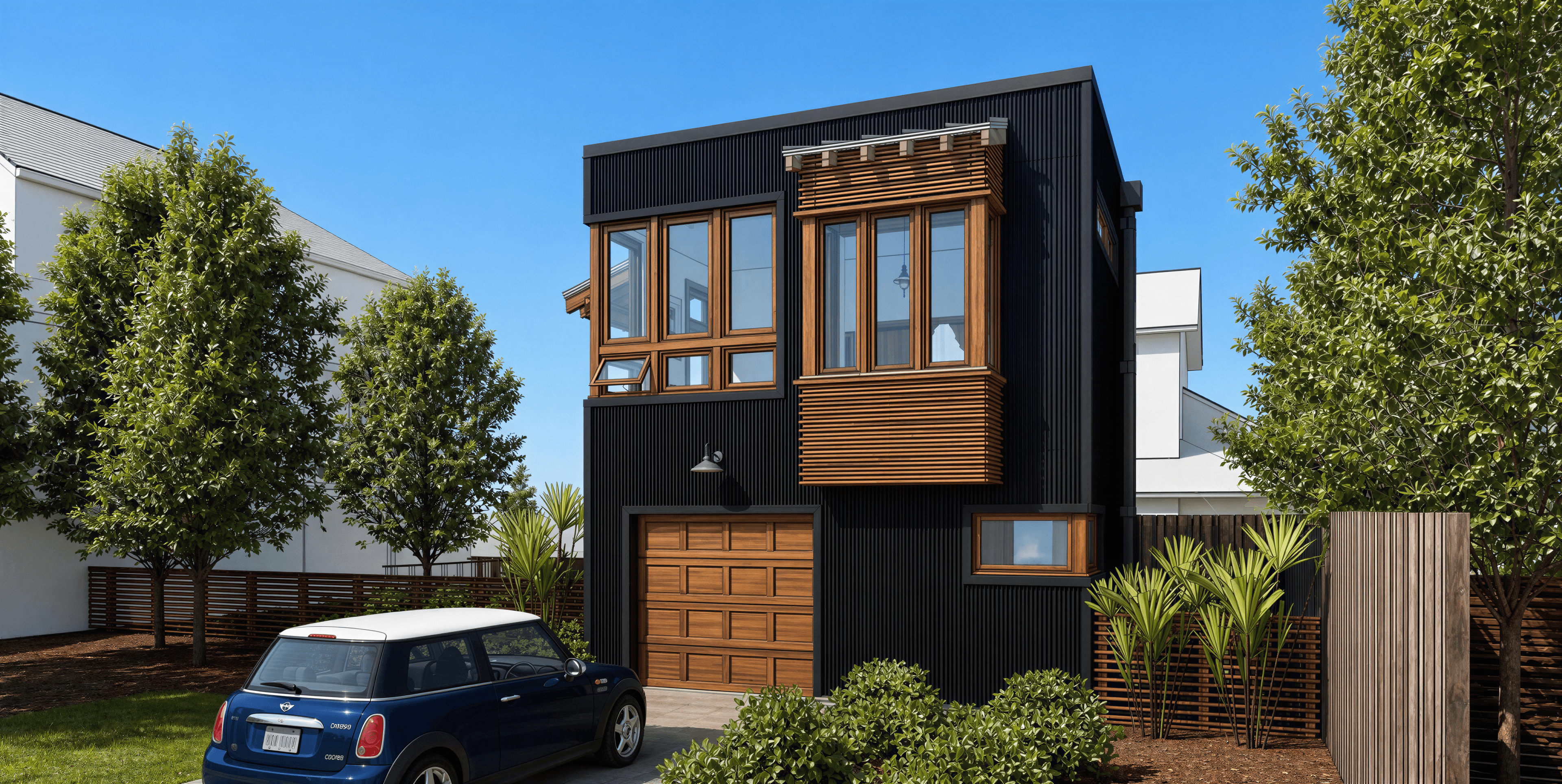
Loft is the lived-in middle ground between pure Industrial and Modern. The style descends from New York warehouse and factory conversions of the 70s and 80s, where the bones of the building stayed visible but the finish level was lifted to make the space genuinely habitable. It works for residential conversions, creative agency offices, photography studios, and high-end short-stays.
For rendering, the strongest cues are scale and structure. Lofts have tall ceilings — 11 to 14 feet is typical — and at least one wall of factory steel-frame windows. Structural columns are exposed: brick, blackened steel, or board-formed concrete. The floor is almost always polished concrete or wide-plank oak on top of concrete. The plan is open: kitchen, living, and dining flow into each other without walls.
The material vocabulary is more restrained than Industrial. One brick wall, not four. Steel structural elements stay visible but window frames are slim and clean. A mezzanine or elevated kitchen platform is a signature move when the ceiling allows. Wood ceilings or exposed beams add warmth to the cool palette.
Lighting is high-contrast cinematic. The tall window dominates the room, casting deep shadows in the back corners. Supplement with a single statement pendant or industrial-style track lighting. The mood should feel substantial — Loft is not soft. Where it goes wrong: trying to make it cozy. Loft has dignity, not comfort; comfort comes from the furniture, not the architecture.
Render prompt
Paste this into airender
A balanced starting point that captures the material, lighting, and mood for Loft. Tweak the specific furniture, materials, or camera direction to match your model.
Loft prompt
Paste into the prompt field in airender, or use as a starting point and tweak the details.
Key materials
Materials that define Loft
These materials carry the look. Mention any of them by name in your prompt to push the render in the right direction.
Color palette
The Loft palette
Click any swatch to copy the hex. Use these in your interior design tool or call them out in the prompt for a tighter match.
Lighting
Lighting that flatters Loft
These lighting conditions match the mood of the style. In airender, pick the matching preset under render options.
FAQ
Common questions
Frequently Asked
Questions
What's the difference between Loft and Industrial?
Restraint. Industrial leans into every cliché — exposed brick everywhere, ducts overhead, edison bulbs in clusters, hard-edged metal furniture. Loft picks one or two structural features (a brick column wall, a steel window) and pairs them with cleaner finishes and softer objects. Loft is livable; Industrial is theatrical.
Do I need a mezzanine for it to read as a loft?
Not strictly. A mezzanine is a strong cue but if your model is a single-story space, lean into the ceiling height and the window. A high ceiling plus a wall of factory glass plus an exposed column reads as loft even without the second level.
Why does my loft render look cold?
Probably no warm material in the prompt. Concrete, brick, and steel all read cool. Add patina leather furniture, an oak floor zone, oiled timber ceiling beams, or a wool rug. One warm pendant lamp filament adds disproportionate warmth.