What this style is
How to read a mid-century modern interior
Mid-Century Modern is the style that came out of postwar America and Scandinavia in the 1940s through 60s. Eames, Saarinen, Knoll, Wegner — designers who treated furniture as serious architectural objects but with a sense of optimism the prewar styles lacked. It's the most enduring residential style of the 20th century and still works in residential, hospitality, and creative-office settings.
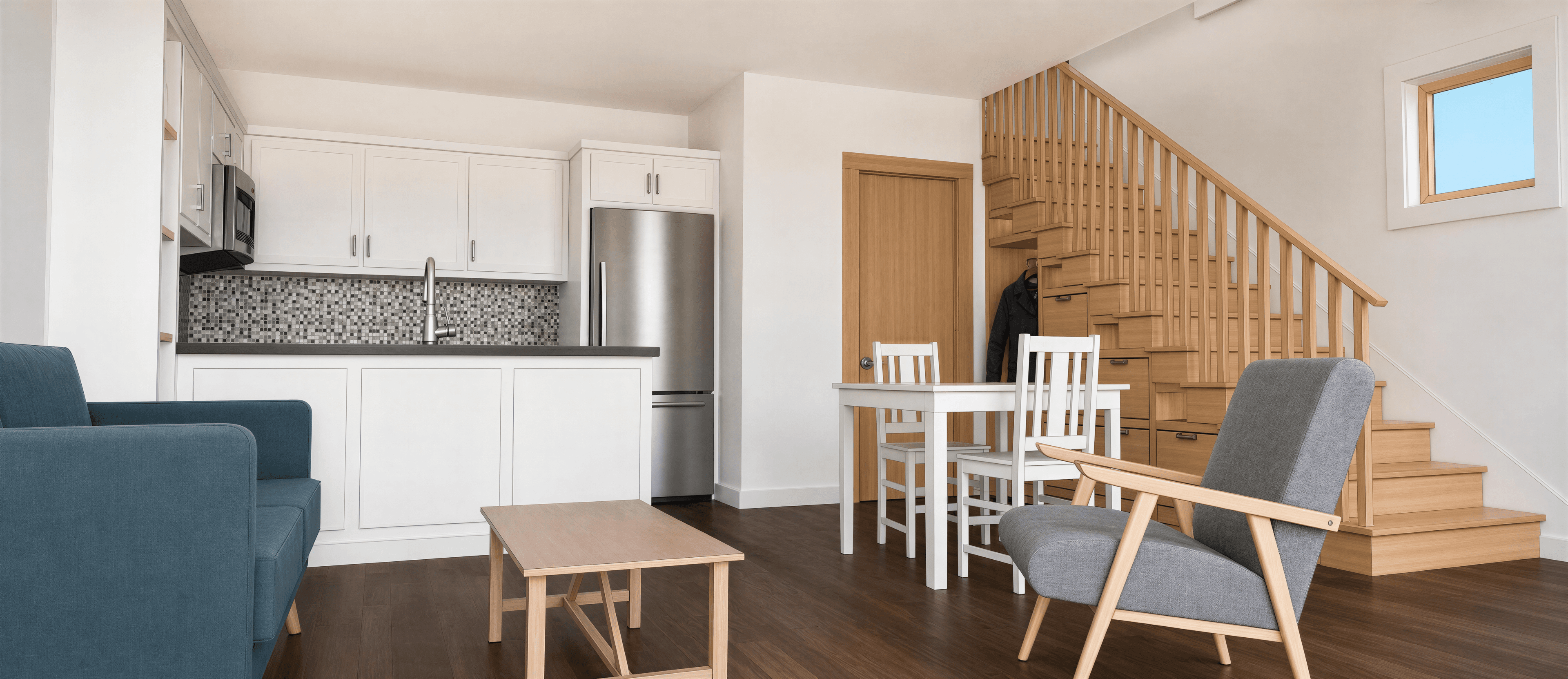
For rendering, the woods do most of the work. Walnut and teak are the signature species, often paired with brass or copper hardware. Furniture sits low — sofa backs at 28 to 32 inches, coffee tables at 14 to 16 — and stands on tapered legs that lift it visually off the floor. The room should feel populated but never crowded; mid-century rooms are designed around conversation, so a seating arrangement that faces inward reads correctly.
Color is where Mid-Century parts company with Scandinavian. The palette runs warmer and earthier: mustard, olive, terracotta, burnt orange, deep teal as accents on a neutral base of white, cream, or warm gray. Geometric patterns — sunbursts, atomic shapes, simple grids — appear on rugs, throw pillows, or a single wall. One bold patterned element is enough; two starts to feel costume.
Lighting suits the style when it's warm and slightly nostalgic. Golden hour raking across walnut grain is the iconic look. Pendant lights with sculptural shapes — Saarinen-style globes, Sputnik chandeliers — work as visual anchors. The mood should feel confident and slightly optimistic, never grim.
Render prompt
Paste this into airender
A balanced starting point that captures the material, lighting, and mood for Mid-Century Modern. Tweak the specific furniture, materials, or camera direction to match your model.
Mid-Century Modern prompt
Paste into the prompt field in airender, or use as a starting point and tweak the details.
Key materials
Materials that define Mid-Century Modern
These materials carry the look. Mention any of them by name in your prompt to push the render in the right direction.
Color palette
The Mid-Century Modern palette
Click any swatch to copy the hex. Use these in your interior design tool or call them out in the prompt for a tighter match.
Lighting
Lighting that flatters Mid-Century Modern
These lighting conditions match the mood of the style. In airender, pick the matching preset under render options.
FAQ
Common questions
Frequently Asked
Questions
Walnut or teak for mid-century renders?
Walnut is more American (Eames, Knoll), teak is more Scandinavian (Wegner, Juhl). Both work. Walnut runs slightly darker and richer; teak is golden and lighter. If the rest of your palette is warm and earthy, walnut. If it leans cleaner and lighter, teak.
How much pattern is too much?
One patterned anchor per view — usually a rug or a single wall covering or an artwork. Two starts to feel costumey. The style's optimism comes from one bold gesture against a calm background, not from layering pattern on pattern.
What lighting captures the mid-century mood?
Golden hour, every time. The whole style was photographed and marketed in the late afternoon — warm raking light across walnut, brass catching the sun. Bright midday works but feels less iconic. Avoid overcast; the style is built around optimism, not muted mood.