
Twenty minutes with a tape measure beats a sofa stuck in the hallway. The doors, stairs, walkways, rug, TV and bed measurements to take before you buy.
The most expensive Black Friday furniture mistake is not paying a few percent too much. It is the sofa that will not turn the corner on the stairs, the rug that floats in the middle of the room, or the bed that leaves no space to walk. Returns on big furniture often cost money or are not allowed at all, so measuring first is the cheapest insurance you can buy.
Grab a tape measure, painter's tape, your phone's notes app, and if possible a second person. Here is everything to measure, in order.
1. Map the delivery path
Start outside and walk the route the furniture will take to its final spot. Costco's delivery guide lists the points to measure (Costco):
- Front doorway height and width, plus the clearance to the opposite wall inside
- Stairwell overhang or ceiling height
- Staircase width, and the corner width if the stairs turn
- Low-hanging light fixtures along the way
- Every interior doorway's height and width, plus clearance to the opposite wall
- In apartment buildings, the elevator's interior height, its door opening, and the distance to the opposite wall
Measure the clear opening with the door fully open, since the door itself and its stops take up space. Write down the smallest number on the route. That is the one that decides everything.
Costco's guide also notes that its team will not hoist furniture or remove windows, and that removing doors and securing light fixtures is your job before delivery day.
2. The diagonal trick for sofas
A sofa that is wider than your door can still get in on its end. The number that decides this is the diagonal depth.
Pottery Barn's rule is that diagonal depth must be less than the door width, and that it helps determine whether a piece can be brought in on its end (Pottery Barn). Costco's version adds the other half: the sofa's length must be less than the doorway height, and its diagonal depth less than the doorway width.
To measure diagonal depth on a sofa you already own, or one in a showroom:
- Lay a straightedge from the top of the back to the front edge of the arm.
- Measure from the bottom back corner straight up to the straightedge, at a right angle.
- That shortest distance is the diagonal depth.
Most retailers list it in the product dimensions. One exception: for pieces without arms, like a sectional wedge, Pottery Barn says not to use diagonal depth and to check that the back height is less than the door width instead.
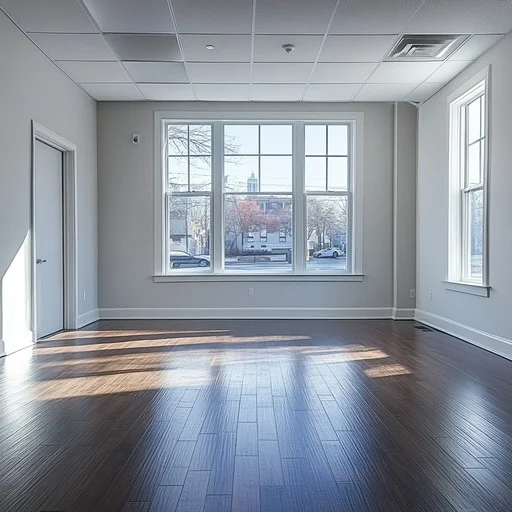
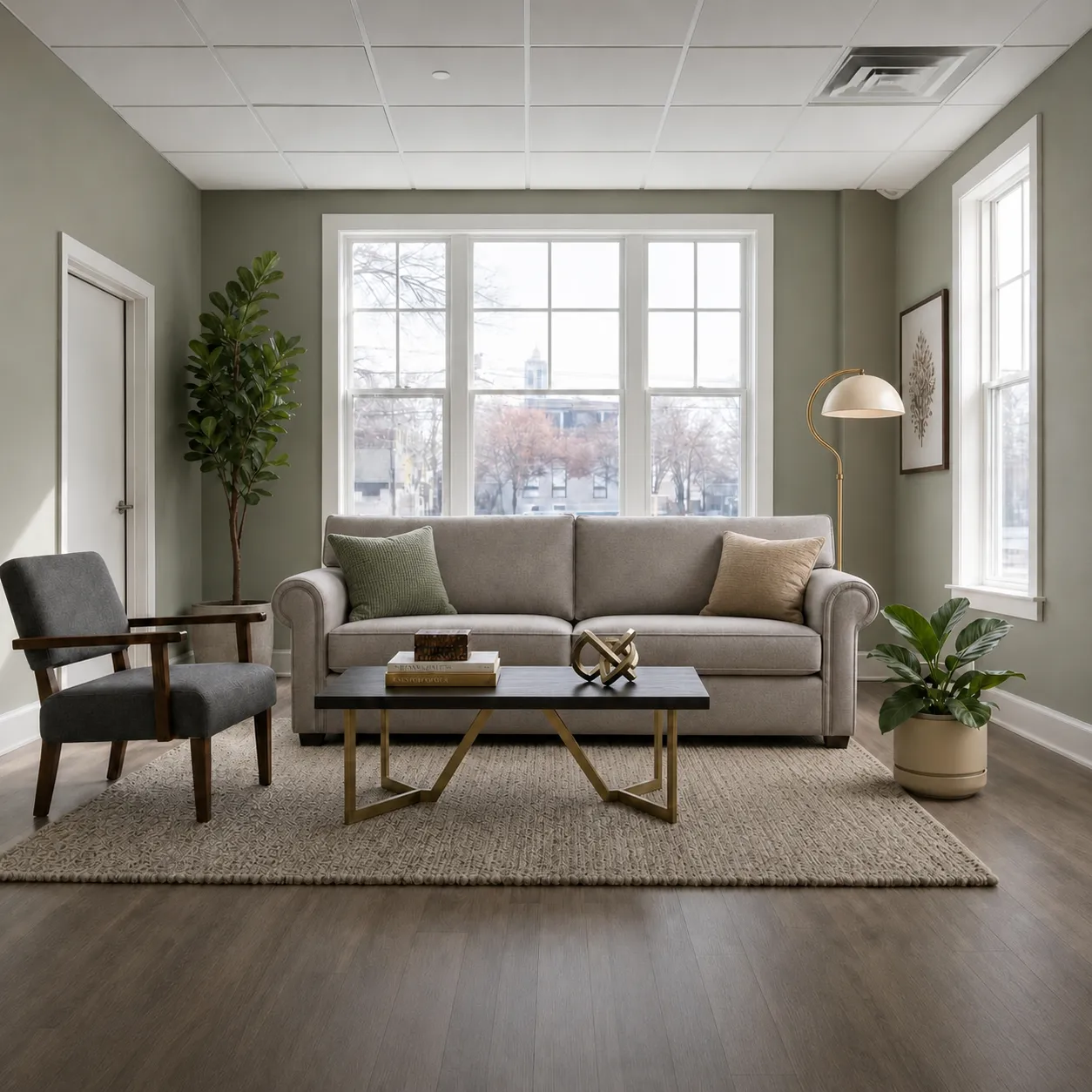
See your own room redesigned in seconds
Upload a photo, pick a style, and shop the exact look. Free to start.
3. Walkway clearances
Furniture that fits through the door can still crowd the room. In a Houzz guide to layout measurements, architect Steven Corley Randel recommends 30 to 36 inches (77 to 91 cm) for circulation around and through a space, about 24 inches between pieces of furniture, and about 36 inches from the dining table edge so others can pass behind a seated diner (Houzz).
The easy test: tape the new sofa's footprint on the floor, then walk around it with a laundry basket. If you have to turn sideways, it is too big for that spot.
4. Rug sizes
Rugs are where most people buy too small. Houzz's rug guide suggests about 18 inches of bare floor between the rug and the walls, shrinking to about 8 inches in a small room, with at least the front legs of the seating on the rug (Houzz). Under a bed, it recommends the rug extend at least 18 inches past each side of a queen or king and at least 12 inches past a full or twin. Under a dining table, leave at least 24 inches of rug beyond the table edge so chairs stay on it when pulled out.
As a starting point, Ruggable says an 8 x 10 fits an 11 x 13 foot room or slightly larger, and a 9 x 12 fits a 12 x 18 foot room or larger (Ruggable). Our rug size calculator does the math for your exact room.
5. TV size by seating distance
Measure from your eyes on the sofa to where the screen will hang, in inches. The widely quoted SMPTE guidance fills about 30 degrees of your view, which works out to a seating distance of about 1.6 times the screen diagonal. THX recommends about 40 degrees for a more cinematic picture, roughly 1.2 times the diagonal (Wikipedia summary of both).
So divide your distance by 1.6 for the smaller end of the range and by 1.2 for the larger end. At 8 feet (96 inches), that is a 60 inch to 80 inch TV. Plug your own numbers into the TV size calculator, which also gives stand width and mounting height.
6. Bed size vs room size
Standard mattress sizes, per the Sleep Foundation: twin 38 x 75 inches, full 54 x 75, queen 60 x 80, king 76 x 80. The Sleep Foundation recommends about 24 inches of space around each side of the bed.
Do the arithmetic before buying. A queen with 24 inches on both sides needs at least 108 inches (9 feet) of wall width, before nightstands. Add the frame and headboard, which are usually bigger than the mattress, and check that a dresser drawer can still open at the foot.
The measurement cheat sheet
| What to measure | Rule of thumb |
|---|---|
| Narrowest door or stair turn | Sofa diagonal depth must be smaller than its width |
| Door height | Sofa length must be smaller, if it goes in on end |
| Elevator | Interior height, door opening, distance to back wall |
| Main walkways | 30 to 36 inches |
| Gap between furniture | About 24 inches |
| Rug to wall | About 18 inches, 8 inches in small rooms |
| Rug past bed sides | 18 inches for queen or king, 12 for full or twin |
| Rug past dining table | At least 24 inches |
| TV size | Seating distance in inches divided by 1.6 to 1.2 |
| Space beside a bed | About 24 inches per side |
Put it together before you check out
Once the numbers work, there is one question a tape measure cannot answer: how it all looks together. airender lets you upload a photo of your room and see it redesigned with new pieces in about 60 seconds, with a shopping list of real products and a running total, so you can check the look before the deal ends.
Then set the spending limit. The furniture budget calculator splits a room budget across the pieces you need, so a Black Friday discount on one item does not quietly blow up the rest.
The bottom line
Measure the route, not just the room. Check the sofa's diagonal depth against your narrowest door, keep 30 to 36 inch walkways, size the rug so furniture sits on it, pick the TV from your seating distance, and leave about 24 inches beside the bed. Twenty minutes now saves a return fee, or a sofa that never makes it past the hallway.

