
A practical weekend checklist for holiday guests: the bed, bedding, darkness, charging, storage and small comforts, with budget tiers and fixes when there is no guest room.
Holiday guests are coming whether the guest room is ready or not. AAA projected 81.8 million people would travel at least 50 miles from home over Thanksgiving 2025, most of them by car (INRIX and AAA). Thanksgiving is November 26 this year, which leaves one or two weekends to get a room ready.
The good news: a comfortable guest room is mostly about a handful of things guests notice at 2 a.m., not about decor. Here is a checklist you can finish in a weekend.
Start by sleeping in it yourself
The fastest way to find what is wrong with a guest room is to spend one night in it. You will notice the streetlight through the blinds, the pillow that is too flat, the outlet that is behind the bed, and the radiator that clanks. Make a list in the morning. That list is your shopping list.
The bed and bedding
The bed is the one thing worth getting right. Standard sizes, per the Sleep Foundation: twin 38 x 75 inches, full 54 x 75, queen 60 x 80. A full gives two adults just 27 inches each, so for couples a queen is the comfortable choice. The Sleep Foundation also recommends about 24 inches of space around each side of the bed, which matters if two people need to get up at night.
Your bedding checklist:
- A mattress protector. Cheap, and it makes the bed feel fresh even if the mattress is old.
- Two sets of sheets. One on the bed, one ready for longer stays.
- Two pillow types per guest. One firmer, one softer. Pillows keep the head and spine aligned, the Sleep Foundation notes, and guests rarely like the same one.
- Layers, not one heavy comforter. A blanket plus a duvet lets guests adjust without asking.
- A topper for an old mattress. If the mattress sags, a topper is a quick fix for a few nights.
Dark, quiet and the right temperature
The Sleep Foundation's advice for a sleep-friendly room is simple: make it as dark as possible, use blackout curtains if the room gets a lot of outside light, and consider a white noise machine if outside noise is beyond your control (Sleep Foundation). It puts the ideal sleep temperature at 65 to 68°F (Sleep Foundation).
In practice that means:
- A blackout panel on the window that faces the street or the sunrise
- A fan or small white noise machine
- An extra blanket in sight, plus a note on how the thermostat works
- A lamp reachable from the bed, and a small night light for the path to the bathroom
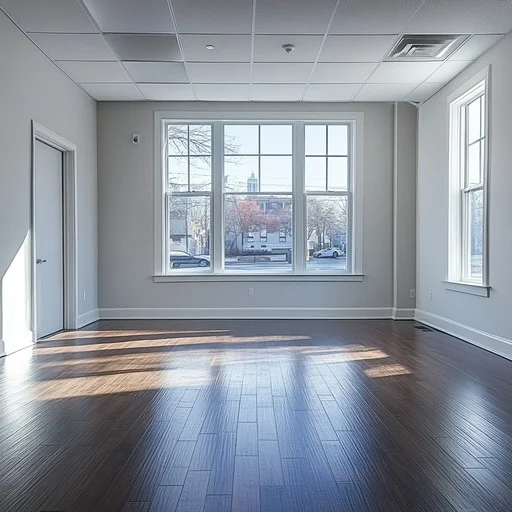
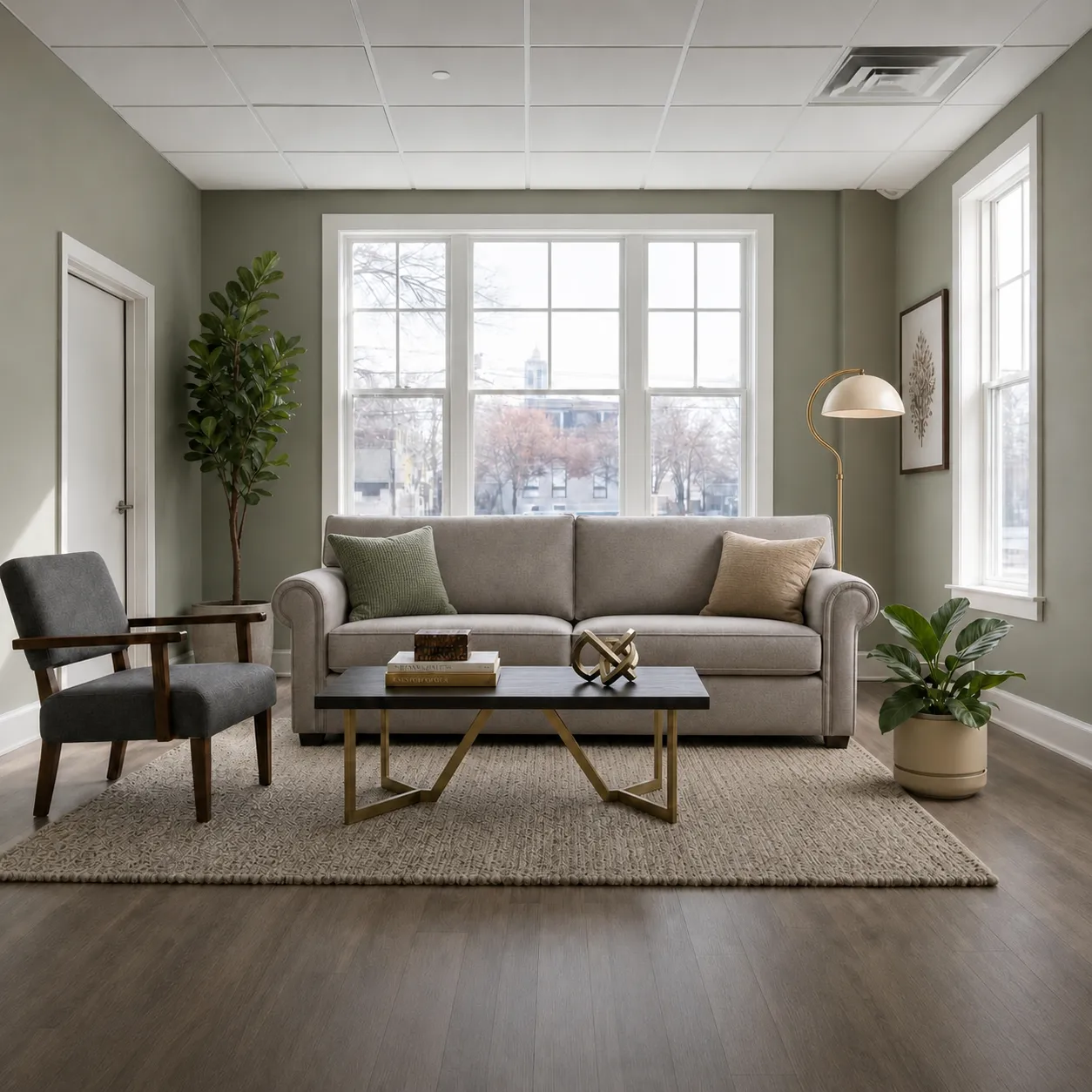
See your own room redesigned in seconds
Upload a photo, pick a style, and shop the exact look. Free to start.
Storage and a luggage spot
Guests living out of a suitcase on the floor is the most common guest room fail. Fix it with:
- Half the closet cleared, with 6 to 8 empty hangers
- One or two empty drawers, or a basket if the dresser is full
- A luggage rack or bench, so the suitcase is off the floor and open
- Hooks behind the door for coats, robes and bags
If the room doubles as storage, it does not need to be empty. It needs one clear surface and one clear spot for a suitcase.
Charging and small comforts
These cost little and get noticed the most:
- A power strip or USB charger at the bedside, so nobody unplugs a lamp
- A card with the Wi-Fi name and password
- A set of towels per guest, folded on the bed
- A water carafe or bottles and a glass
- A small basket with spare toothbrushes, toothpaste and earplugs
- A mirror, so guests are not waiting for the bathroom
What to spend: two budget tiers
Under $150. Spend it on what touches the guest: a mattress protector, a set of sheets, a second pillow, a blackout panel for the worst window, a power strip, and some hooks. Skip decor entirely.
Under $500. Add what makes the room feel like a room: a nightstand and lamp on each side (our nightstands under $150 list has options that do the job), a luggage rack, a mattress topper, curtains for every window, and a small rug.
If the room needs more than a refresh, see what a full bedroom costs in our cost to furnish a bedroom guide. And if you want to see the result first, airender redesigns a photo of your spare room as a guest room in about 60 seconds and returns a shopping list of real products with a running total.
When the guest room is an office or the couch
Most homes do not have a dedicated guest room. Here are the realistic options:
- Sleeper sofa. Works every day as a sofa. Check the opened depth in the product dimensions, since the bed needs floor space when pulled out. On November 13, 2026, IKEA's US sleeper sofa range started at $299 for the FRIDHULT and went past $1,000 for sectional sleepers (IKEA).
- Daybed. A twin mattress on a sofa-like frame. Good for a home office, and many have drawers underneath for linens.
- Air mattress. Fine for a few nights. Put it on a rug, inflate it the night before so it can stretch, top it up before bed, and use a real fitted sheet.
- The couch. Add a mattress topper, real pillows and a blackout option for the living room windows, and give the guest a set wake-up time so they are not woken by the household.
For an office, clear the desk, move work papers out, and give the guest a place to set things down. If you plan to buy a sleeper or daybed during Black Friday, measure first with our furniture sizing checklist, and remember that Black Friday falls the day after Thanksgiving, so it is too late for delivery before Thanksgiving guests arrive. Our guide to buying a sofa on Black Friday covers delivery and return timing.
The weekend checklist
- Sleep in the room one night and list what bothered you.
- Wash all bedding, add a protector, set out two pillow types.
- Darken the window, add a fan or white noise.
- Clear hangers, a drawer and a luggage spot.
- Set up charging, Wi-Fi card, towels and water.
- Decide where a second guest sleeps if needed.
The bottom line
A great guest room is a good bed, a dark and quiet room at 65 to 68°F, a place for a suitcase, and a charger within reach. Most of that fits in a $150 budget and one weekend. Start with a night in the room yourself, and fix what you notice.

