Can ChatGPT find real furniture for my room and make a shopping list?
What ChatGPT's shopping research returns in 2026, where it goes wrong, the prompts that get buyable pieces out of it, and how to check each link before you pay.
Updated November 16, 2026 · By Daniel Borodin, founder of airender.ai
Short answer
Partly. ChatGPT's shopping research finds real furniture from store listings and turns it into a buyer's guide, but OpenAI warns that prices and availability can be wrong, so every link needs opening on the store's own page. The furniture in a room image ChatGPT draws is invented and has no links, and ChatGPT cannot confirm a piece fits or keep a room total. For the redesign and the list in one step, airender picks real products first and draws your room from them, so the pieces in the picture are the ones on your list.
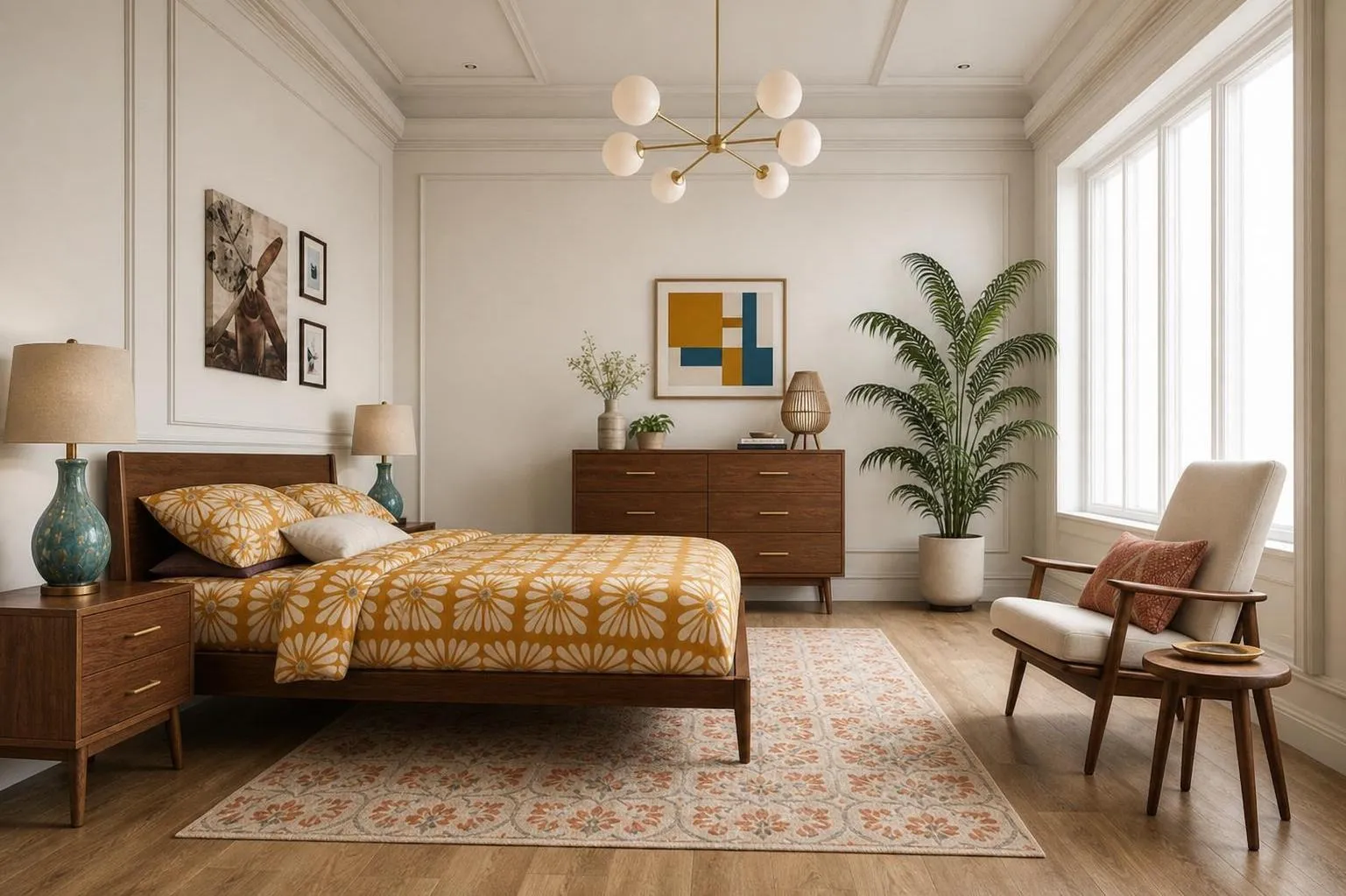
 Before
 After, with airender
What ChatGPT's shopping tools return today
ChatGPT has had proper shopping features since late 2025, and OpenAI changed how buying works in March 2026. Four things matter for furniture.
A buyer's guide, after a few minutes
Shopping research launched November 24, 2025 for logged-in users on Free, Go, Plus and Pro, web and mobile. Choose it from the + menu, answer its clarifying questions, and it returns comparisons and tradeoffs. OpenAI named home and garden among its best categories.
Product cards in a normal chat
Ask about sofas in an ordinary chat and cards may appear. Since February 2026, logged-in US adults on Free and Go also see ads, labeled sponsored and kept apart from the answer. Plus and Pro show none.
A judge for in-store photos
Upload pieces you are weighing beside a room photo. Homeowner Jenna Redfield did this from HomeGoods and At Home: "Which of these pillows works best for my charcoal couch?"
Room lists and budget splits
It breaks a room into seating, tables, lighting, rugs and decor and divides a budget across them. That list is the backbone of the prompts below.
Where you pay. Instant Checkout, buying inside ChatGPT, began in September 2025 with US Etsy sellers. Around March 20, 2026, OpenAI said it was "transitioning to apps" and refocused on product discovery. Shopify told merchants that shoppers now find products in ChatGPT and finish on the merchant's store, in an in-app browser on the phone app or a new tab on the web. For a sofa or a dresser, expect to be sent to the retailer.
Five ways a ChatGPT furniture list goes wrong
- Products that do not exist. In tests reported by Business of Home in August 2025, ChatGPT and Gemini sometimes recommended products that do not exist. A plausible name is not proof until the product page loads.
- Pieces in a generated image cannot be bought. The Houzz discussion "The Hallucination Trap" says it plainly: the fabric, exact dimensions and leg styles in a gorgeous AI living room "do not exist anywhere in the real world".
- Prices that trail the store. OpenAI says shopping research may show incorrect pricing or availability, and its help center says prices can lag merchant changes. The first price usually belongs to the first merchant listed, not necessarily the cheapest.
- Labels and reviews nobody checked. Tags like "Budget-friendly" are generated by ChatGPT, and review summaries are written by the model; OpenAI does not verify the ratings behind them.
- No fit check. ChatGPT knows only the sizes you type. It cannot see that a 38 in (97 cm) deep sofa blocks the balcony door unless you say the door is there.
The picture and the products never meet
In ChatGPT the room image and the shopping results come from different tools. Shopping research may surface listings that resemble the render, but nothing connects them. Treat the render as a mood board and shop piece by piece.
Seven prompts that pull buyable furniture out of ChatGPT
Run them in order, from describing the room to a checked, totaled list. Replace everything in [brackets]. If you still need the design picture, make it first with how to use ChatGPT to redesign your room, then come back here to shop.
- 1
Describe the room with numbers
Upload a room photo and send: "My [living room] is [12 x 15 ft / 3.7 x 4.6 m]. The sofa wall is [96 in / 244 cm] between a window and a door. Floor is [mid-tone oak], walls [white], I'm keeping [the gray rug and the bookshelf]. Furniture budget [$2,000]. Don't recommend anything yet; tell me what you understood and ask what you need."
- 2
Get a room list with size limits
"Group a room list into furniture, lighting, textiles and decor. Give each piece a maximum width, depth and height in inches and cm and a budget, so the total stays under [$2,000]." Compare its limits with your tape measure: an 84 in (213 cm) sofa on a 96 in wall leaves 6 in (15 cm) per side.
- 3
One piece per shopping research session
Open shopping research from the + menu: "Find a [boucle accent chair] under [$400], max width [32 in / 81 cm], max depth [34 in / 86 cm], that ships to [ZIP code]. Prefer the maker or primary seller. Show the product page link for each." Answer its follow-ups on color and wear.
- 4
Force a checkable format
"List each item as: name, store, price, exact dimensions, link. If you did not see the price or dimensions on the store's product page, write NOT SEEN instead of estimating." The guesses become visible, so you know which lines to check hardest.
- 5
Judge the shortlist against your room
Screenshot your top two or three and upload them with the room photo: "Which works best with my [charcoal sofa] and [oak floor], and why?" ChatGPT is strong here, because it is comparing real things rather than inventing them.
- 6
Total it and trim it
Paste the chosen items with prices you confirmed on each store page: "Add these up. If the total is over [$2,000], swap the two most expensive items for options under [$X] each in the same style." Keep your own total from store prices, not chat prices.
- 7
Ask what to measure
"For each item, what should I measure in my room and my entry before ordering?" Expect door widths, stair turns and walkway space. Then measure them yourself.
| Example trim | Before | After | Saved |
|---|---|---|---|
| Sofa table | $600 | $250 | $350 |
| Pair of table lamps | $340 | $190 | $150 |
| Room total | $2,340 | $1,840 | $500 |
The 60-second check for every link
Invented products and OpenAI's own price warnings lead to one habit: open each link yourself before it goes in a cart. About a minute per item.
- A real product page loads, not a search page, a category page, a 404 or a different product.
- Name, color and material match what ChatGPT described. Sofas often come in several fabrics at different prices.
- The store's dimensions fit your measured space. A common rule is 30 to 36 in (76 to 91 cm) for main walkways.
- It gets through your door, hallway and stair turn.
- The checkout price, with shipping, delivery and tax.
- The seller is the maker or the primary seller, not a reseller reusing the same photos.
- Returns on large items: some stores charge return shipping or a restocking fee on furniture.
- Ratings read on the store itself, since ChatGPT's review summaries are model-written.
Why a whole room is slow in ChatGPT
The honest dividing line is how many pieces you are buying. ChatGPT handles one well-defined purchase very well. A full room multiplies the work: each piece is its own research session, its own link check and its own line in a total you keep by hand.
| Task | ChatGPT (shopping research + images) | Room app (airender) |
|---|---|---|
| Ideas and style advice | Strong: explains why a piece or color works | Style presets and plain-word changes ("darker sofa, more plants"), not a chat advisor |
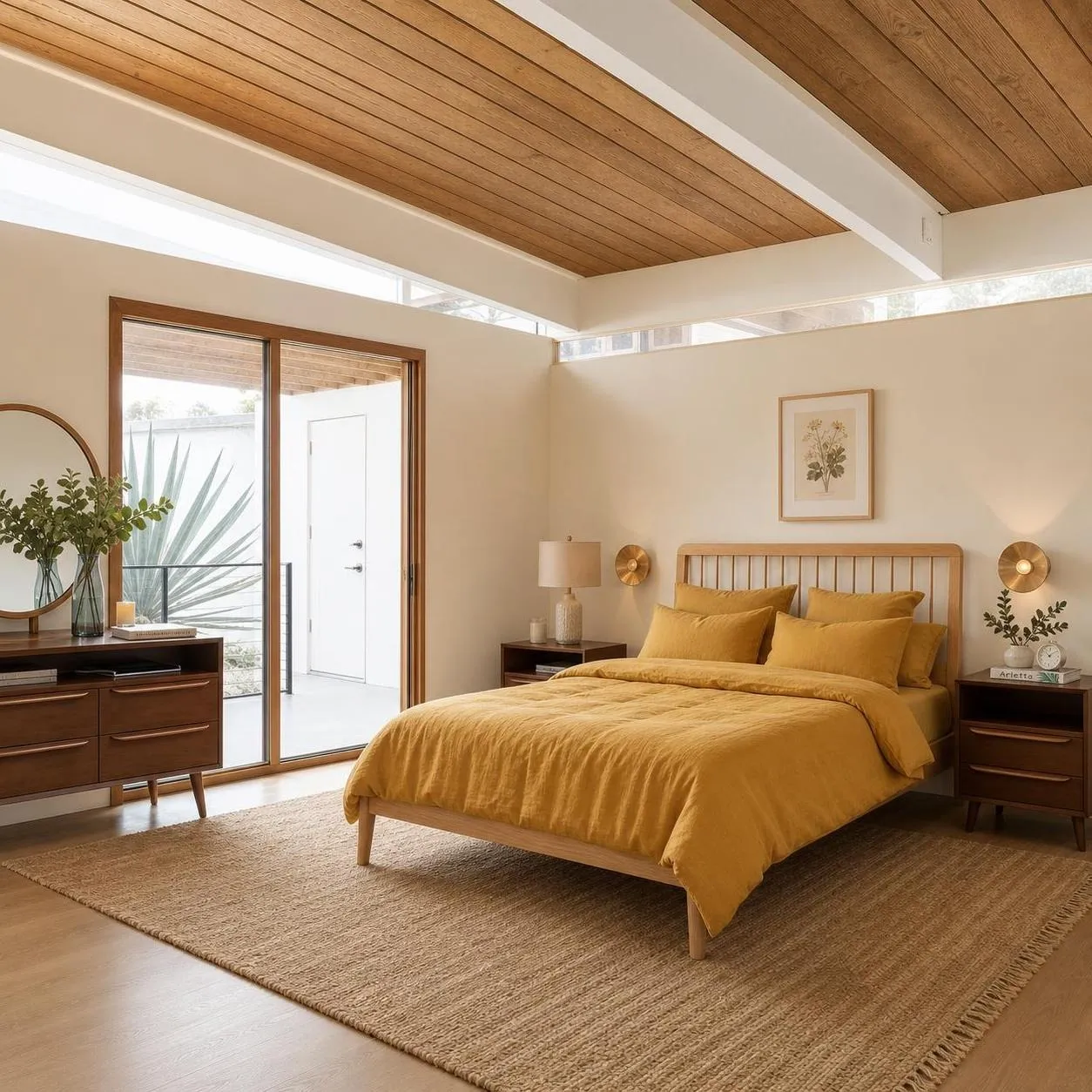
| Furniture in the image | Invented, no links | Real listings picked first, then drawn into your photo; the same products fill the list |
| Product links | Store listings from research; check each one | Buy link per piece: the Amazon product page, or an Amazon search for that piece when no exact listing is available |
| Prices | Can lag the store; first price may not be lowest | From store listings where available; Amazon shows the current price at checkout |
| Room total | You add it up | Running total that updates as you change pieces |
| Swapping one piece | New search, recalculate by hand | Cheaper or pricier alternate, total updates |
| Fit | Math on the numbers you type | Not to scale; measure before you buy |
| Checkout | Mostly on each store's site since March 2026 | On Amazon, per piece or the whole room in one cart |
| Cost | Shopping research on Free, Go, Plus and Pro; free access is not promised unlimited | 1 free redesign (card added, $0 charged), $27 one room, $75 whole home, one-time |
ChatGPT as a furniture shopper
Good
- Any room, any piece, any odd constraint
- Shopping research launched on the free tier
- Excellent for one piece with many requirements
- Compares photos of real pieces against your room
- Searches across the web, not one store's catalog
Watch out
- Sometimes names products that do not exist
- Its room images show furniture you cannot buy
- Prices can lag the store
- Labels and review summaries are unverified
- No fit check, no room total
ChatGPT for one piece, a room app for a room
- Stay in ChatGPT if you need one or two pieces (an accent chair, a rug under a sofa you own), want a second opinion, or have a space no app lists, like a closet office.
- Switch to a room app if you are filling an empty or tired room and want to see it furnished first, then buy what you saw.
In airender the order is reversed from ChatGPT: it chooses a real listing for each slot, then generates the room from those product photos, so the furniture in your design is the exact furniture on your list, priced, linked and totaled. That approach is laid out in AI room design with the exact furniture you can buy and, step by step, in how airender picks real furniture. One tip for shoppers: set your budget band before the first design, since the pieces are chosen to fit it. It is still an AI image, so check color and size on the listing before you order.
Already have a picture you love from somewhere else? Finding the furniture from a photo of a room covers reverse image search and other routes, and can you buy the furniture in an AI room design explains which tools give you real products at all.
Affiliate note
airender's shopping links go to Amazon. As an Amazon Associate, airender.ai earns from qualifying purchases.
Questions people ask
Straight answers to the follow-up questions.
Can ChatGPT find the exact furniture in the picture it made?
No. The furniture in a generated room image is invented, so there is no exact product to find. Shopping research can return real pieces that look similar, and you compare them and confirm size and price on each store's page.
Are ChatGPT's furniture prices accurate?
Not always. OpenAI says prices can lag merchant changes and shopping research may show wrong pricing or availability. Trust only the price you see at checkout.
Can I buy furniture inside ChatGPT?
Mostly not. Instant Checkout launched in September 2025, but in March 2026 OpenAI said it was moving to apps and focusing on discovery. Most purchases now finish on the store's own site, sometimes in an in-app browser on the phone app.
Is ChatGPT shopping research free?
It launched in November 2025 for logged-in users on Free, Go, Plus and Pro. OpenAI's help center says free access is not a promise of unlimited access, so limits can change; you can still build the room list in a normal chat.
Are ChatGPT's furniture picks ads?
Ads are labeled sponsored and shown apart from the answer, and only to logged-in US adults on Free and Go. Judge each pick on its store page regardless of where it appeared.
Is ChatGPT or a room app better for furniture shopping?
ChatGPT for a single item with many requirements; a room app for a whole room, where the list and total matter. The broader comparison is in [airender vs ChatGPT for room design](/airender-vs-chatgpt-for-room-design).
Want the whole room linked and totaled?
Upload a photo of your room and get a redesign built from real products, with buy links and a running total.
Related
- Is there an AI tool that designs your room with the exact furniture you can buy?
- How to use ChatGPT to redesign your room from a photo
- ChatGPT or a room design app: which should you use to redesign your room?
- How do I find the exact furniture from a room photo I love?
- Can you actually buy the furniture you see in an AI room design?
- Can I add a whole room of furniture to my Amazon cart at once?
Sources
- OpenAI Help Center: Improved shopping results from ChatGPT search · checked November 16, 2026
- MacRumors: ChatGPT Adds AI Shopping Research Feature for Holiday Gift Finding · checked November 16, 2026
- Search Engine Roundtable: Shopping Research Assistant In ChatGPT · checked November 16, 2026
- ContentGrip: Inside ChatGPT's new shopping feature · checked November 16, 2026
- eesel.ai: ChatGPT shopping research, summarizing OpenAI Help Center · checked November 16, 2026
- eesel.ai: ChatGPT Instant Checkout 2026 · checked November 16, 2026
- Stellagent: OpenAI shopping agent strategy pivot (citing CNBC and The Information) · checked November 16, 2026
- Digital Commerce 360: Shopify integration with ChatGPT changes · checked November 16, 2026
- MacRumors: ChatGPT Now Has Ads for Free and Go Tier Users · checked November 16, 2026
- Business of Home: The AI interior design race has a surprising front-runner · checked November 16, 2026
- Houzz: The Hallucination Trap (AI renderings) · checked November 16, 2026
- Jenna Redfield: How I Used ChatGPT to Redesign My Living Room · checked November 16, 2026
Explore more room design guides
Compare AI design tools, estimate furnishing costs, and turn one room photo into a practical plan.
How this page was made
Written by Daniel Borodin, founder of airender.ai. Research and first drafts were AI-assisted; facts about other companies come from their own pages and the sources listed above, checked November 16, 2026. Prices change, so check the store before you buy. Published November 16, 2026, updated November 16, 2026.