Can you actually buy the furniture you see in an AI room design?
It depends on whether the tool drew the furniture or picked it. Here is how to tell, with one real run shown product by product. Checked November 16, 2026.
Updated November 16, 2026 · By Daniel Borodin, founder of airender.ai
Short answer
It depends on the order the tool works in. A general image generator or ChatGPT invents the pieces, so nobody sells that exact sofa. Tools that draw first and match afterwards hand you real products that only resemble the picture. airender does it the other way round: it picks a real listing for each piece first, then draws your room from those products, so the furniture in your design is the exact furniture on your shopping list. It is still an AI image, so check color and size on each listing before you order.
One real run: an entryway, two products picked before the picture
A real airender run: small entryway
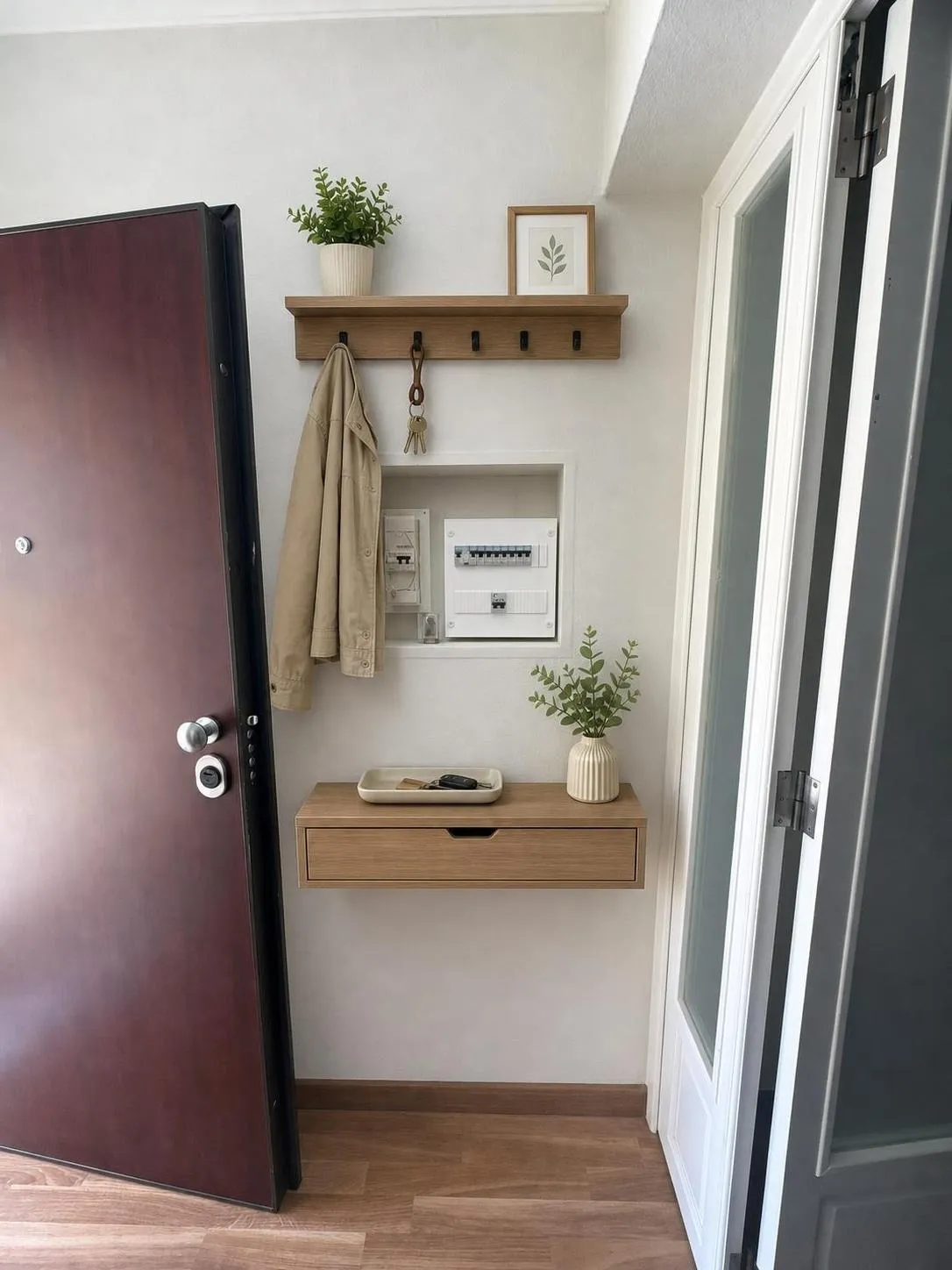 Before
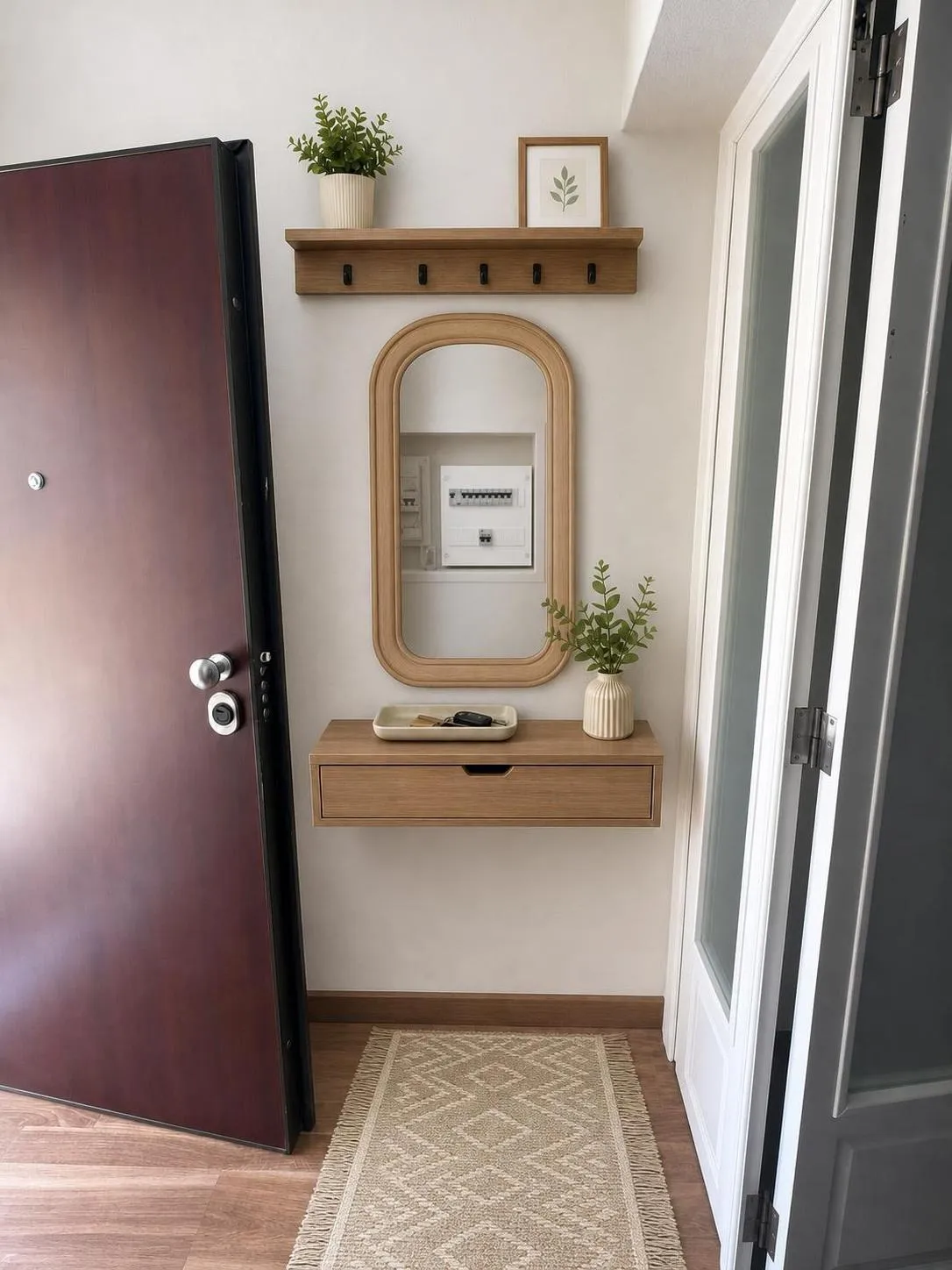 After, with airender
Picked first, then drawn into the room
From Daniel's own account. airender wrote a brief for each missing piece (the gray line under each product), picked a real listing for it, and only then drew the room. The mirror and the runner in the after image are those two listings. As an Amazon Associate, airender.ai earns from qualifying purchases.
Read the run from the bottom up. The brief for the mirror asked for a slim oak frame, upright, 20 to 24 inches (51 to 61 cm) wide, because the wall between the door and the closet is narrow. The brief for the rug asked for something about 2.5 by 4 feet (76 by 122 cm), which is the size that fits a hall this tight without catching the door. Those briefs were filled with two real products, and the image was generated from them. Nothing in the picture was invented first and hunted down later.
Notice what the run left alone: the door, the wall shelf with hooks, the floating drawer and the plants all stay. A small space often needs two pieces, not a full makeover, and the list reflects that. For the same idea applied to a whole hallway, see AI entryway design with real furniture.
One thing to check in this room
The mirror hangs over the fuse box. In a real hallway, hang it on a hook or cleat so you can lift it off to reach the breakers. The AI image cannot tell you that; your own walls can.
Why most AI-generated furniture is not for sale
A general image model does not shop. It learned what sofas look like from a vast number of photos and paints a new one that suits your room. Business of Home described it in 2023 as something like the mathematical average of 150,000 chairs, not a specific piece you can order from Design Within Reach. The exceptions are icons such as the Barcelona chair, which the same article says are often reproduced accurately. The no-name cream sofa beside it almost never is.
Homeowners noticed. In a Houzz thread called "The Hallucination Trap (AI renderings)", one poster wrote that if an AI generates a gorgeous living room layout, "you cannot actually go out and buy it", because "the fabric texture, exact dimensions, and leg styles do not exist anywhere in the real world." Their advice was physical paint samples, real tape measures and human eyes, which is still sound advice for the big pieces.
Chatbots can name products that do not exist
Business of Home reported in August 2025 that ChatGPT can give real product recommendations through OpenAI's shopping features, but that ChatGPT and Gemini sometimes recommend products that do not exist. Open every link a chatbot gives you. The full picture is in can ChatGPT find furniture for my room.
Four kinds of AI room tools, and what each lets you buy
| Type | Order of work | Is the furniture in the picture a real product? | Examples (sourced) | Watch out for |
|---|---|---|---|---|
| Image generators and chat AIs | Draws a new room with no product data behind it | No, apart from famous designs | General image generators; ChatGPT and Gemini images | Products a chatbot names may not exist |
| Draw, then match | Draws the room, then searches a catalog for each piece | No. You get real products that resemble the drawn ones | Havenly's AI tool; HomeDesigns AI Furniture Finder; Wayfair Decorify (since replaced) | Wrong item types, plus color, leg and size gaps |
| Pick products, then draw | Picks a real listing for each piece, then draws the room from those products | Yes. The pieces drawn are the pieces on the list | airender | Some pieces link to an Amazon search when that product is not listed on your Amazon store |
| Catalog placement | Places 3D models of one store's products into a scan of your room | Yes, at real, adjusted proportions | IKEA Kreativ | One store only, and it needs the IKEA app |
Business of Home's coverage of the draw-then-match group is the best evidence available. Havenly's free AI tool, in iOS beta since October 2025, tries to pair "invented" pieces with real items in Havenly's catalog. The match is rarely exact, the magazine wrote, but if the AI draws a gray sofa you get links to real gray sofas. Havenly's CEO called it an experimental work in progress.
Wayfair's Decorify searched Wayfair's 30 million SKUs for look-alikes of AI-imagined pieces. It sometimes found a good match, occasionally mistook an armchair for an ottoman, and Business of Home judged it unreliable. Wayfair started over with Muse, which does not try to tie AI pieces to specific SKUs at all. Shoppers who liked Decorify's idea are comparing Wayfair Decorify alternatives.
IKEA Kreativ is the strong counterexample. You take a wide-angle photo in the IKEA app, it becomes a 3D image of your room, you can erase your own furniture, and IKEA's 3D products appear in real, adjusted proportions. It covers furniture, decor, wall decorations, rugs and wall-mounted furniture. If fit to the inch matters and you like IKEA, it is a better tool than any draw-then-match app. The limits are one store and one app; the IKEA Kreativ alternatives page covers the other options.
Two claims in the companies' own words, not tested here. RoomGPT launched "Shop & Design" on Product Hunt on April 7, 2026, calling itself "the first AI interior designer where the render is the shopping cart" with every item real and buyable in one click; the launch names no retailers, and its homepage does not mention shopping. Interior AI's homepage says it "uses actual furniture you could buy at IKEA" but shows no shopping links or list.
If you want the tool that answers this page's question with a yes, start with AI room design with the exact furniture you can buy, and for the step order behind it, how airender picks real furniture. With airender, one tap also puts the whole room in your Amazon cart, where you review each item before checkout.
Checks before you order, by tool type
What you check depends on where the product came from. With a list built products first, the product is already the one in the picture, so the work is on the listing. With an invented picture, you first have to find something that resembles it.
| Your design came from | Step 1 | Step 2 | Step 3 |
|---|---|---|---|
| A products-first list (airender) | Open the listing and pick the color variant by name | Read width, depth and height against your tape measure | Read reviews and the return window before the big pieces |
| A draw-then-match list | Put the matched product next to the picture: same item type, arms, legs? | Decide which differences you can live with | Then the same listing checks |
| An image with no products | Crop one piece and run a visual search | Shortlist two or three results that fit your size | Then the same listing checks |
For the visual search route, Google Lens identifies who makes a piece, what it costs and where to buy it, and you can add words like "green" or "84 inch" to narrow the results (shopping results work in listed countries, including the US and UK). In the Amazon app, tap the Lens icon in the search bar and upload a screenshot; if the image shows several pieces, circle the one you want. Crop to one object first, because a whole room confuses the search. The longer walkthrough is in find furniture from a photo of a room.
Worked example, a sofa. Your wall measures 120 inches (305 cm). The listed sofa is 84 inches wide (213 cm), 35 deep (89 cm) and 32 high (81 cm). That leaves 18 inches (46 cm) on each side for a lamp table, which works. Then measure the narrowest doorway and hallway on the delivery route, because the depth or height has to pass through, often with the sofa on its side. Compare seat height and seat depth with the sofa you sit on now: those two numbers decide how it feels, and no image shows them. An AI image cannot settle any of this, for reasons laid out in how accurate AI interior design is. Last, look at customer photos. If half show the cream looking yellow, yours will too.
Where to spend your checking time
A pillow a shade off still gives you the look. A sofa 6 inches (15 cm) too long wrecks the room. Put your effort into the two or three expensive pieces.
| Item | Cost of getting it wrong | What to check on the listing |
|---|---|---|
| Pillows and throws | Low, easy to return | Cover size (18x18 or 20x20 inches, 46 or 51 cm) and color family |
| Lamps | Low | Overall height and shade color |
| Mirrors and wall art | Low to medium | Width against the furniture below, weight against your wall anchors |
| Rugs and runners | Medium. Size matters more than pattern | Size against your layout and door swing |
| Sofas, beds and dining tables | High. Bulky, costly and hard to send back | Dimensions, doorways, seat depth, reviews and return terms |
| Cabinets, vanities and built-ins | Not a shopping-list item | Needs measurements and a contractor quote. airender restyles kitchens and bathrooms visually but does not price cabinets, plumbing or contractor work |
Planning a whole room? Total the big pieces first, then fill in with low-risk decor such as these, where small differences do not matter.
Prices come from listings and can change between designing and ordering, and Amazon shows the current price at checkout. If you are still seeing small gaps between a picture and its products, why AI room designs look different from the products explains each one. If you are deciding whether to use AI at all, is AI interior design worth it compares the costs.
Questions people ask
Straight answers to the follow-up questions.
Can ChatGPT find the furniture in my AI room picture?
Partly. ChatGPT can suggest real products through OpenAI's shopping features, but Business of Home reported that ChatGPT and Gemini sometimes recommend products that do not exist. Open every link and compare it with the picture before you buy.
Is the furniture in AI room designs real?
In most tools, no. An image model draws a new piece, so that design is not on sale anywhere, apart from icons like the Barcelona chair. Real products come from tools that pick listings before drawing, like airender, or that place a store's 3D models, like IKEA Kreativ.
Which AI room apps give you a shopping list?
Havenly's AI tool links to items in its catalog that resemble the drawn ones, HomeDesigns AI's Furniture Finder suggests close alternatives, and airender gives a list of the products it drew, with buy links and a room total. IKEA Kreativ uses real IKEA products. RoomGPT says its April 2026 Shop & Design version is shoppable.
Will the sofa I order be the one in the picture?
With airender, yes: the sofa was picked before the room was drawn, and the list shows that product. With a draw-then-match tool, you get a different sofa that resembles it. Either way, judge color from customer photos, since the picture uses your room's light.
Do I need to measure if the app shows the furniture in my room?
Yes, for anything big. AI room images are not measured, so a sofa can look right in the picture and still miss the wall or the doorway. Even with IKEA Kreativ's real proportions, a tape measure is the final check.
Can I buy everything in one cart?
With some tools. airender puts the whole room in your Amazon cart in one tap, and RoomGPT says its render works as a shopping cart. Review each item in the cart and remove anything that fails your size check.
See your room with furniture you can order
Upload one photo and get your room redesigned from real products, with a shopping list, buy links and a room total.
Related
- Is there an AI tool that designs your room with the exact furniture you can buy?
- How does airender design your room with real products?
- Why does the AI design look different from the products in the shopping list?
- Can ChatGPT find real furniture for my room and make a shopping list?
- The best IKEA Kreativ alternatives in 2026
- How do I find the exact furniture from a room photo I love?
Sources
- Business of Home: 3 big problems AI design apps are racing to solve (May 3, 2023) · checked November 16, 2026
- Business of Home: Havenly gets into the AI design game (Oct 17, 2025) · checked November 16, 2026
- Business of Home: Wayfair's new tool shows AI's strengths and limitations (Mar 28, 2025) · checked November 16, 2026
- Business of Home: The AI interior design race has a surprising frontrunner (Aug 6, 2025) · checked November 16, 2026
- Houzz: The Hallucination Trap (AI renderings) · checked November 16, 2026
- IKEA: How does IKEA Kreativ work? · checked November 16, 2026
- Interior AI: homepage · checked November 16, 2026
- Product Hunt: RoomGPT, Shoppable AI Interior Designs (Apr 7, 2026) · checked November 16, 2026
- RoomGPT: homepage · checked November 16, 2026
- HomeDesigns AI: Furniture Finder · checked November 16, 2026
- Google: Lens · checked November 16, 2026
- About Amazon: How to use Amazon Lens · checked November 16, 2026
Explore more room design guides
Compare AI design tools, estimate furnishing costs, and turn one room photo into a practical plan.
How this page was made
Written by Daniel Borodin, founder of airender.ai. Research and first drafts were AI-assisted; facts about other companies come from their own pages and the sources listed above, checked November 16, 2026. Prices change, so check the store before you buy. Published November 16, 2026, updated November 16, 2026. As an Amazon Associate, airender.ai earns from qualifying purchases.